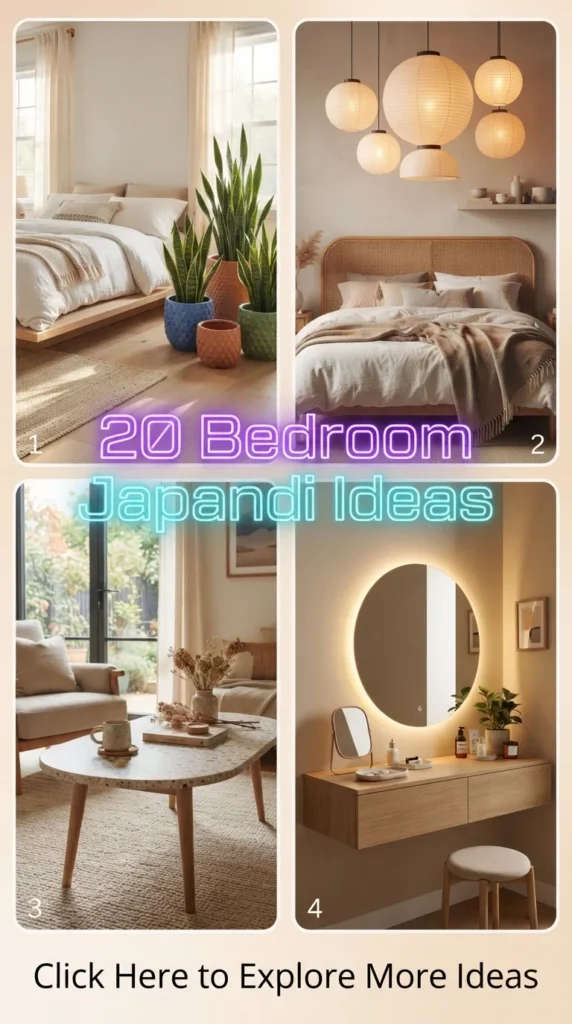
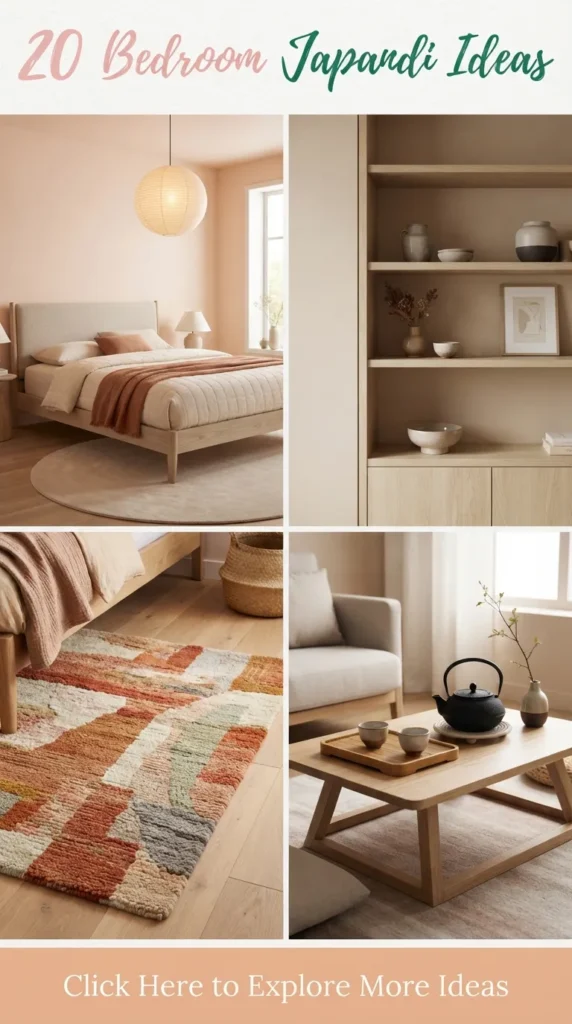
Japandi interior design combines the timeless elegance of Japanese wabi-sabi philosophy with the functional, cozy warmth of Scandinavian hygge. The bedroom serves as an ideal canvas for this union: uncluttered lines, authentic raw textures, warm earthy neutrals, and intentional minimalism create a restorative sanctuary.
Below are 20 curated Japandi bedroom concepts, complete with practical instructions, design advice, and creative variations to help transform your space into a peaceful retreat.
1. Low-Profile Platform Bed with Integrated Floating Nightstands
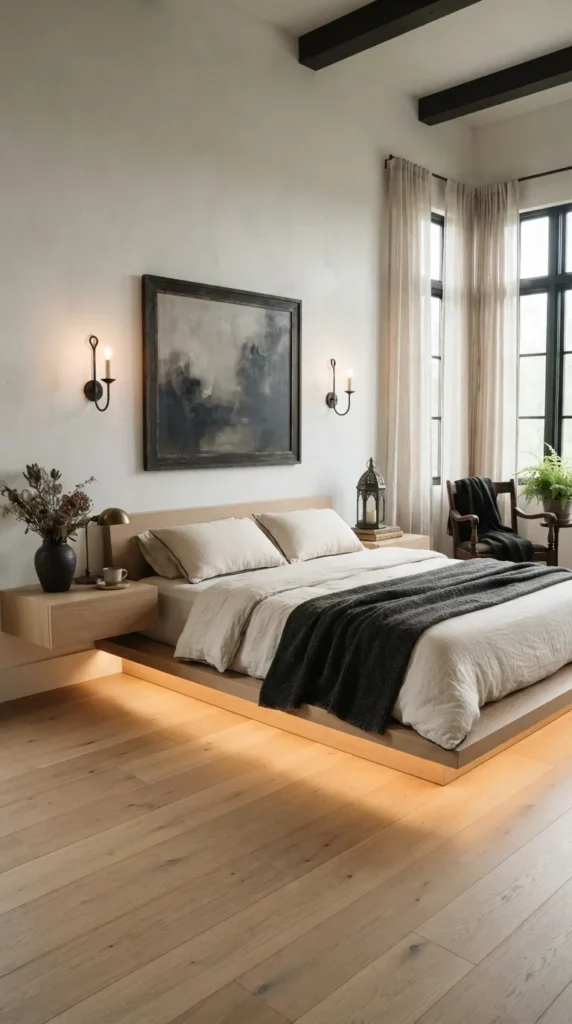
Low-profile platform beds anchor a room by lowering the visual center of gravity, drawing inspiration from traditional Japanese tatami platforms while incorporating sleek Scandinavian joinery.
- What This Idea Means: It establishes an open, grounded layout that emphasizes horizontal sightlines, making ceilings feel higher and rooms noticeably larger.
- How to Make It:
- Measure your room to select a wide-base wooden platform frame with cantilevered side shelves.
- Choose light-toned or warm woods such as white oak, natural ash, or light walnut with a matte polyurethane finish.
- Keep the mattress sleek, opting for a firm, low-depth profile (8–10 inches) tucked neatly within the frame perimeter.
- Ensure all cables and cords are hidden behind the integrated headboard backplate.
- Tips & Variations:
- Tip: Choose integrated hidden under-bed LED strip lighting with a warm color temperature (2400K–2700K) to create a subtle floating effect at night.
- Variation: For rooms with limited storage, select a platform that incorporates seamless touch-latch under-bed drawers lined flush with the wooden base.
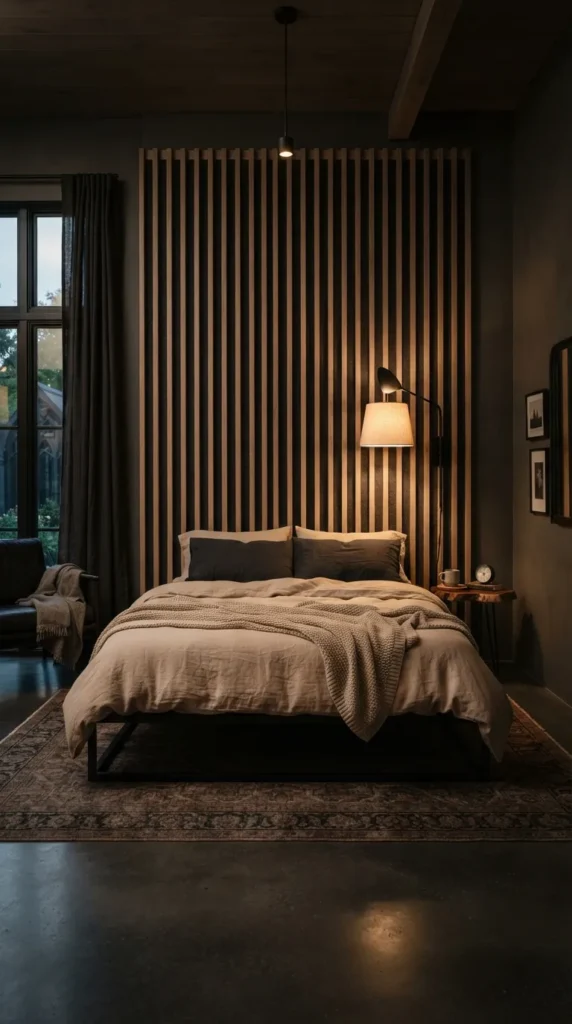
2. Acoustic Slatted Wood Accent Wall
Slatted vertical timber walls provide acoustic insulation and tactile dimension, replacing busy artwork with natural texture.
- What This Idea Means: It merges Scandinavian architectural acoustic paneling with traditional Japanese koshi screens, introducing subtle vertical rhythm behind the bed.
- How to Make It:
- Measure the accent wall area directly behind the headboard or across an entire primary wall.
- Install sound-dampening recycled PET felt panels fitted with narrow vertical slats of natural oak or bamboo.
- Use matte black screws or construction adhesive to secure panels firmly against drywall.
- Cap top and side edges with matching solid timber trim for a tailored, architectural edge.
- Tips & Variations:
- Tip: Extend the slatted paneling across only two-thirds of the wall behind the bed to form an asymmetrical focal point.
- Variation: Apply an ebony or charcoal stain over white oak slats to introduce dramatic contrast against bone-white lime-washed walls.
3. Microcement & Lime-Washed Textured Walls
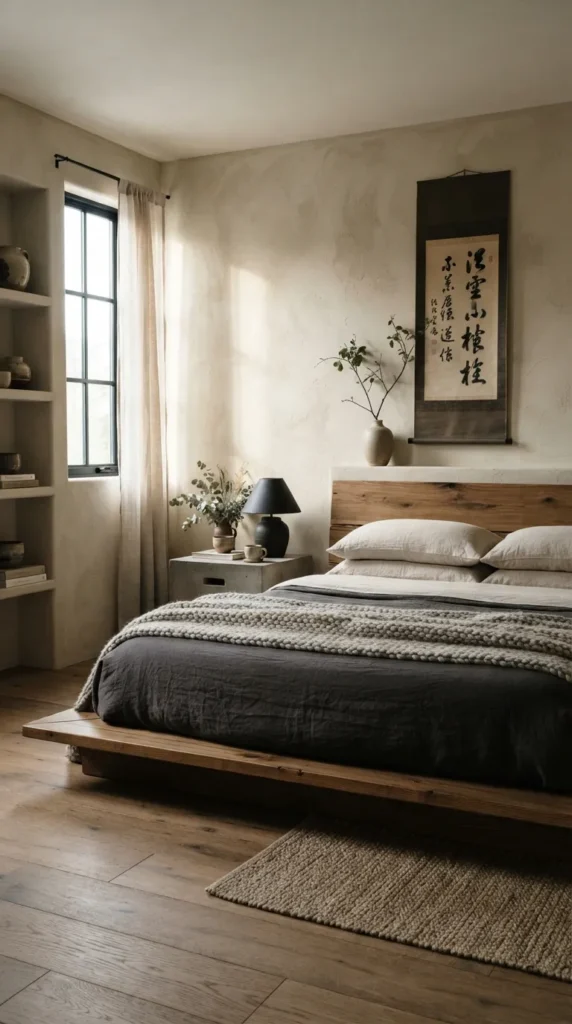
Flat paint gives way to tactile mineral finishes that catch light throughout the day, celebrating natural visual imperfections.
- What This Idea Means: This finish draws on wabi-sabi—finding beauty in natural variations, subtle brush patterns, and organic, non-uniform textures.
- How to Make It:
- Prep drywall by repairing imperfections and rolling on a quartz-infused primer.
- Apply authentic mineral lime paint or microcement using wide, overlapping criss-cross strokes with a block brush or stainless steel trowel.
- Layer two light coats, allowing the base coat to cure, creating cloudy, organic tonal shifts.
- Seal with a breathable matte mineral topcoat in areas subject to direct touch.
- Tips & Variations:
- Tip: Choose soft warm gray, muted oatmeal, ecru, or light stone rather than cool, sterile grays.
- Variation: Pair textured microcement walls with a smooth, light oak hardwood floor to balance rough and polished elements.
4. Oversized Sculptural Washi Rice Paper Pendant
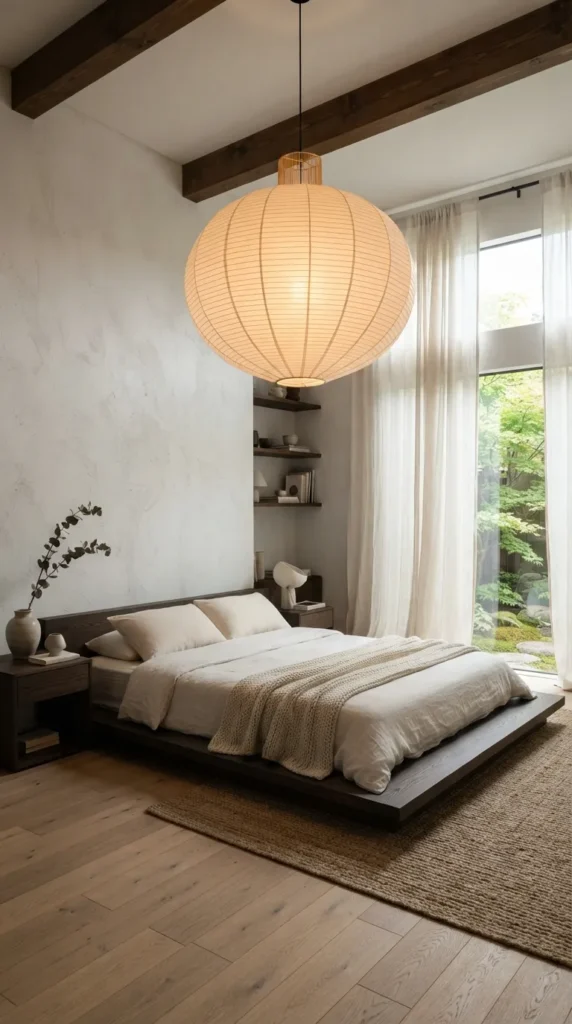
Light fixtures in Japandi bedrooms serve as functional sculptures, casting diffused ambient light throughout the space.
- What This Idea Means: Inspired by Isamu Noguchi’s Akari light sculptures, these fixtures create a soft, weightless focal point over the bed.
- How to Make It:
- Select a high-grade handmade washi paper lantern with a wire or bamboo skeleton (minimum 24–30 inches wide).
- Hang the pendant centered over the lower third of the bed or slightly off-center over a corner reading nook.
- Pair with a smart warm-white dimmable LED bulb (2200K–2700K).
- Install a braided fabric cord in linen or charcoal rather than a plastic wire.
- Tips & Variations:
- Tip: Ensure the bottom rim of the pendant sits at least 7 feet above the floor to maintain clear sightlines.
- Variation: Group three varied geometric washi pendants (spherical, oval, and oblong) at staggered drop heights in high-ceiling bedrooms.
5. Layered Raw Linen Bedding in Earthy Tones
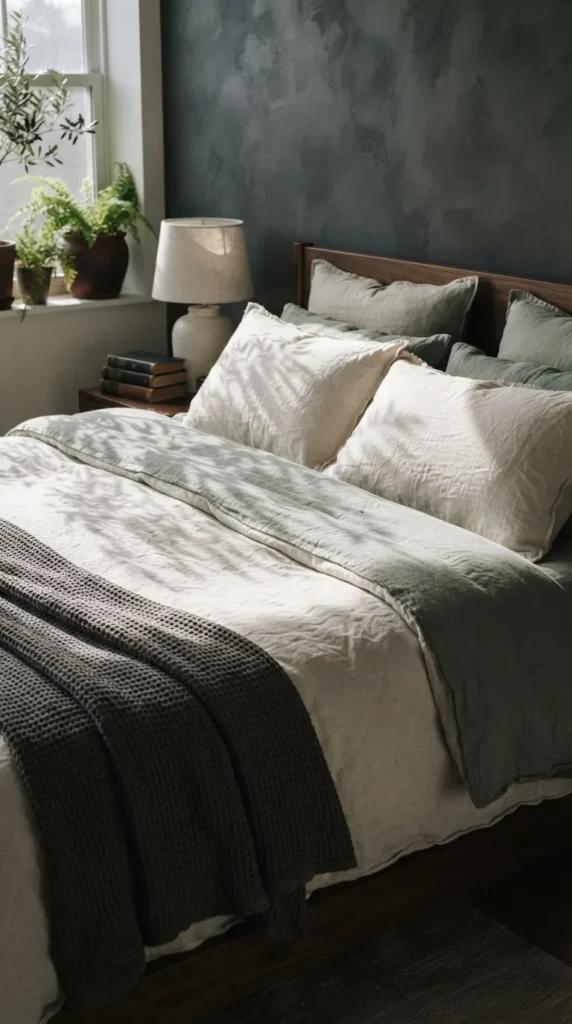
Japandi bedding rejects stiff, overly ironed linens in favor of soft, lived-in textiles made from pure flax linen.
- What This Idea Means: It reflects Scandinavian hygge comfort through breathable textures and a relaxed, unconstructed drape.
- How to Make It:
- Base the bed with a washed organic linen duvet cover in off-white, light fawn, or natural sand.
- Add an unironed waffle-weave cotton or boiled wool throw blanket folded loosely across the footboard.
- Stack four pillows: two firm foundational sleeping pillows and two soft linen-cased decorative pillows in a contrasting muted sage, taupe, or terracotta tone.
- Leave edges naturally draped rather than tucked under the mattress.
- Tips & Variations:
- Tip: Wash 100% French flax linen with gentle eco-detergents and tumble dry low with wool dryer balls to enhance its natural rumpled drape.
- Variation: Introduce an indigo (aizome) or muted charcoal runner across a warm beige linen duvet for added visual contrast.
6. Built-In Low-Profile Shoji-Inspired Wardrobe
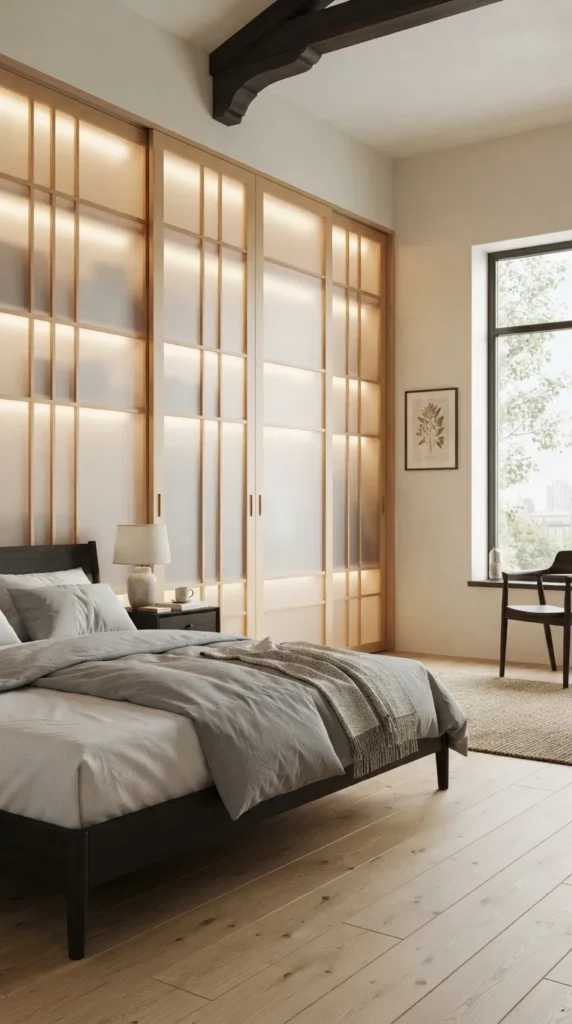
Traditional swinging closet doors are replaced with full-height sliding panels that optimize floor space and eliminate clutter.
- What This Idea Means: It draws inspiration from Japanese shoji and fusuma screens, creating a continuous, clean wall surface.
- How to Make It:
- Construct or customize floor-to-ceiling recessed wardrobes with sliding track hardware.
- Frame door panels in solid ash or light beech with structural grid divides.
- Inset translucent frosted acrylic, frosted glass, or durable rice-paper laminated panels within the frames.
- Install recessed push-pull finger pulls flush with the wood framing.
- Tips & Variations:
- Tip: Install internal automated warm-white LED strips that activate when doors slide open.
- Variation: Substitute paper-style inserts for natural cane webbing or slatted oak dowels to blend Scandinavian woven craftsmanship with Japanese form.

7. Natural Tatami Mat Floor Inset
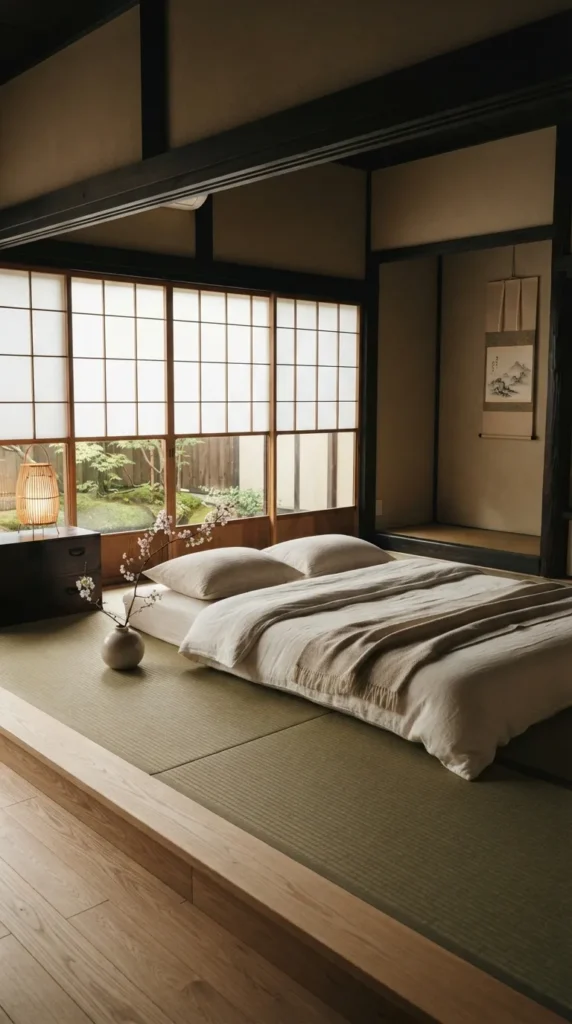
Authentic dried rush grass tatami mats bring organic fragrance, gentle underfoot cushioning, and timeless geometry to bedroom flooring.
- What This Idea Means: It references traditional Japanese washitsu rooms, fostering a grounded atmosphere directly on the floor.
- How to Make It:
- Build a low-rise wooden floor recess (approx. 2 inches deep) or build a raised perimeter border out of solid natural timber.
- Lay standard Japanese rush grass (igusa) tatami mats tightly edge-to-edge inside the frame.
- Place a low futon frame or an ultra-low platform mattress directly atop the center of the mats.
- Maintain mats with gentle dry vacuuming and occasional airing to preserve the rush scent.
- Tips & Variations:
- Tip: Avoid walking on natural tatami with hard footwear; keep the area strictly barefoot or use soft cotton indoor slippers.
- Variation: In modern apartments, set modular borderless tatami squares (Ryukyu tatami) in a checkerboard weave pattern.
8. Floor-to-Ceiling Sheer Linen Drapery
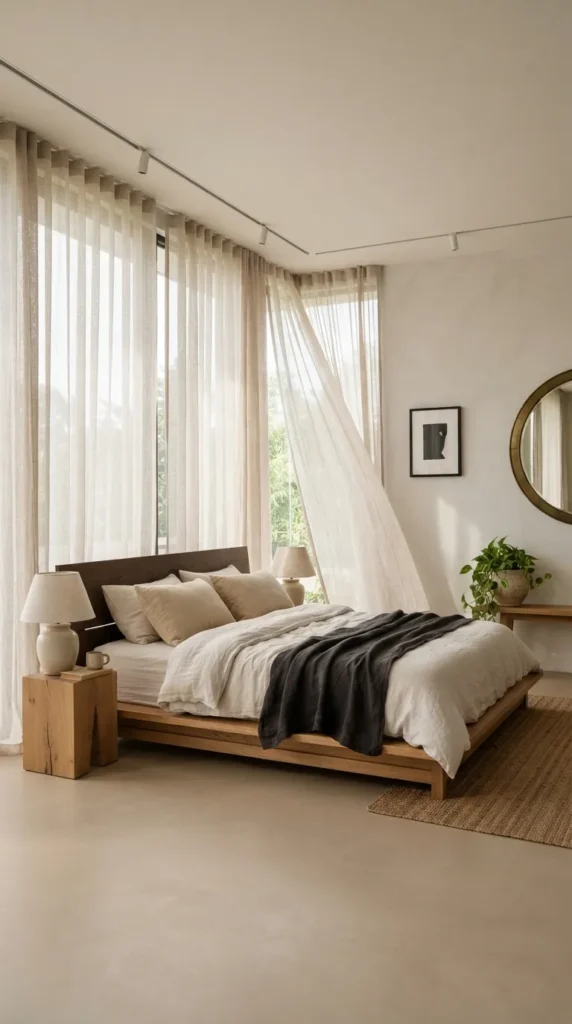
Window treatments in Japandi design prioritize soft, filtered daylight over heavy, decorative curtains.
- What This Idea Means: Light control is achieved with a breezy, minimalist elegance that blurs interior and exterior boundaries.
- How to Make It:
- Mount ceiling-recessed curtain tracks flush with the ceiling plaster along the entire window wall.
- Hang sheer, unlined natural linen or airy cotton-linen drapery with rippled headings.
- Ensure curtains skim or rest gently against the floorboards (a 0.5-inch puddle).
- Pair with hidden motorized blackout roller shades concealed within the ceiling pocket for nighttime sleep quality.
- Tips & Variations:
- Tip: Extend curtain tracks beyond window frames to make walls appear wider and taller.
- Variation: Choose natural oatmeal, unbleached flax, or warm cream tones over bright optic whites to keep the incoming light warm.
9. Minimalist Ceramic & Stoneware Styling
Decorative accents are kept to a curated minimum, focusing on tactile clay, imperfect pottery, and handmade ceramic objects.
- What This Idea Means: It embodies wabi-sabi by replacing mass-produced trinkets with artisanal stoneware that highlights craft and material honesty.
- How to Make It:
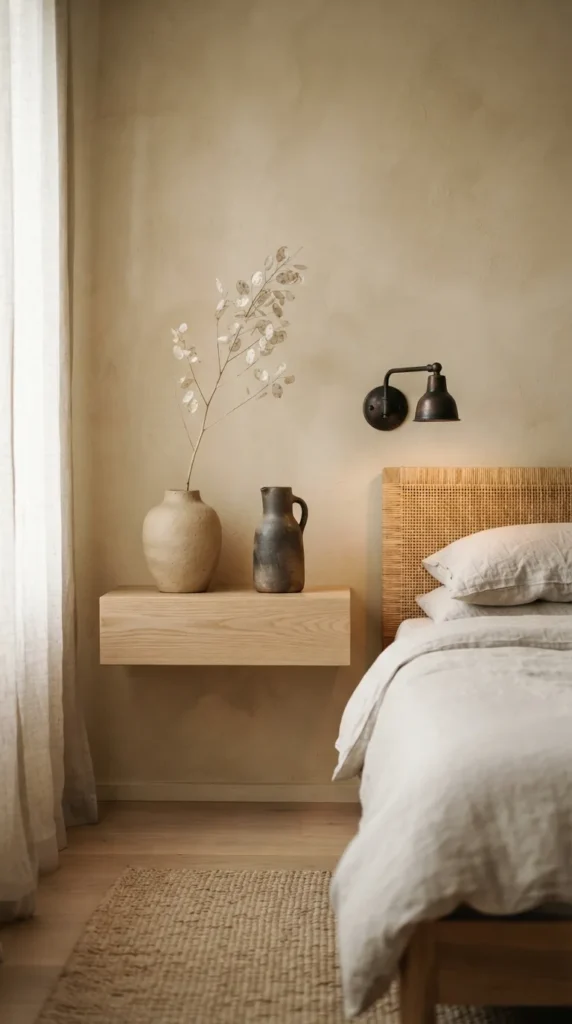
- Select 2–3 handcrafted ceramic vessels of varying heights with unglazed, textured matte exteriors.
- Display a single dry botanical branch, such as dried persimmon, bare quince, wild grasses, or olive stems.
- Arrange items on low dressers, wooden benches, or deep window sills using an asymmetrical composition.
- Keep surfaces 80% free of items to leave room for visual breathing space.
- Tips & Variations:
- Tip: Shop local ceramic studios for one-of-a-kind pieces featuring crackled glazes, visible throwing rings, and raw iron-spotted clay.
- Variation: Use an authentic Japanese stone suiseki or an unpolished basalt river rock as a bookend on a low floating shelf.
10. Floating Oak Vanity & Meditative Mirror Nook
A dedicated vanity or dressing nook designed with minimal horizontal lines helps reduce morning clutter and routine stress.
- What This Idea Means: It bridges functional Scandinavian joinery with a calming, meditative atmosphere.
- How to Make It:
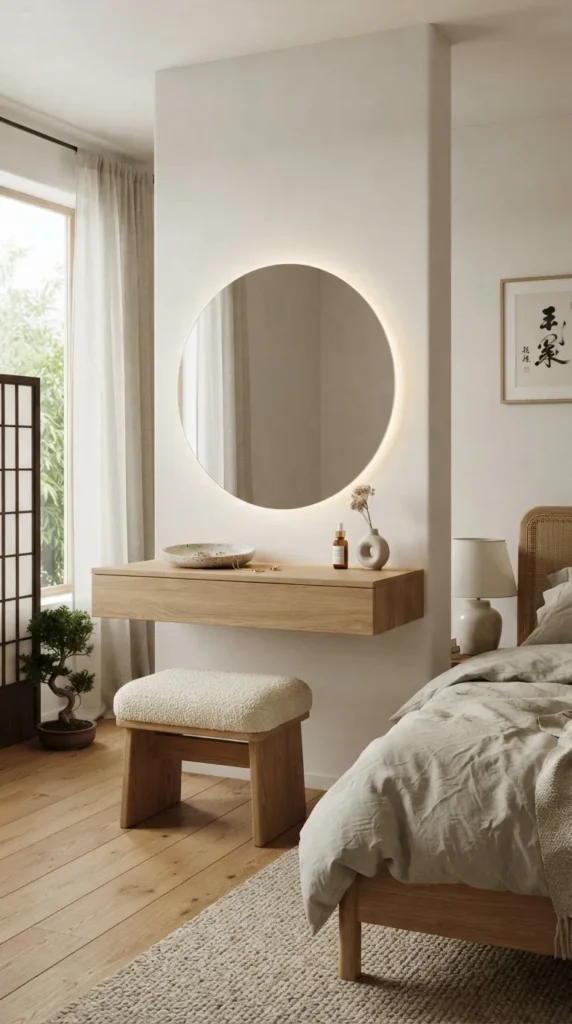
- Wall-mount a shallow (14–16 inch deep) drawer unit made from solid white oak or beech with beveled finger pulls.
- Hang a large frameless or ultra-thin timber-rimmed circular or asymmetrical organic mirror directly above.
- Pair with an armless, linen-upholstered low stool or a three-legged solid oak milking stool.
- Keep the surface clear using interior drawer organizers for toiletries.
- Tips & Variations:
- Tip: Backlight the round mirror with a halo LED strip (2700K) to provide soft, shadowless face illumination.
- Variation: Replace the circular mirror with an arched, black-stained wood mirror to add structural height.
11. Sunken Japanese-Style Bed Frame (Oki-Doko Inspired)
Sunken platform arrangements create an architectural, grounded sleeping nook that feels secure and tranquil.
- What This Idea Means: It adapts traditional stepped Japanese floor architecture into modern residential spaces, setting the sleeping zone apart.
- How to Make It:
- Build a custom raised platform across a portion of the bedroom floor using solid timber joists and oak planking.
- Create a recessed central pocket sized specifically to accommodate a standard mattress flush with the platform surface.
- Detail step edges with rounded bullnose woodwork for comfort and safety.
- Finish the surrounding elevated timber platform as an integrated lounge and reading surface.
- Tips & Variations:
- Tip: Integrate small flush brass floor sockets along the perimeter for charging devices without trailing messy extension cables.
- Variation: Line the sunken interior recess with cedar planks to release a natural, grounding aroma.
12. Asymmetrical Ceramic Sconces and Low Lighting
Japandi bedroom lighting avoids central glaring spotlights in favor of warm, directional pools of soft light.
- What This Idea Means: It follows Jun’ichirō Tanizaki’s In Praise of Shadows, using balanced shadows and warm light to create depth and restfulness.
- How to Make It:
- Install hardwired wall sconces crafted from slip-cast clay, terracotta, or brushed spun brass on either side of the bed.
- Position sconces at sitting eye-level (roughly 38–44 inches from the finished floor).
- Hang a single dropped cord pendant on one side of the bed and mount a low-profile wall sconce on the other to create balanced asymmetry.
- Ensure all light fixtures operate on independent dimmers.
- Tips & Variations:
- Tip: Choose downward-facing cone shades or opaque slip shades that direct light toward reading material while keeping the room softly shadowed.
- Variation: Mount an articulated Scandi-style swing-arm sconce finished in matte black on an exposed lime-wash wall.
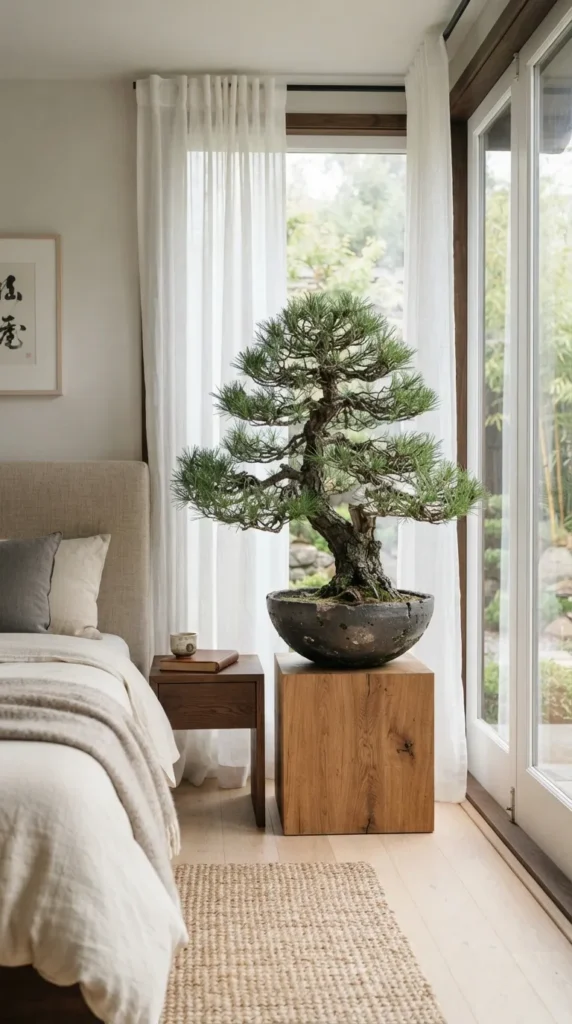
13. Indoor Bonsai or Architectural Ficus Display
Bringing botanical elements indoors connects the bedroom to nature, emphasizing clean sculptural forms over dense green foliage.
- What This Idea Means: It integrates the Japanese art of shakkei (borrowed scenery) and biophilic design by featuring a single sculptural plant.
- How to Make It:
- Select an architectural indoor plant such as a Japanese Maple (Acer palmatum), Black Pine bonsai, Ficus Umbellata, or dwarf Olive tree.
- Plant in a heavy, shallow unglazed stoneware bowl or a raw concrete cylinder pot.
- Elevate the pot on a solid timber plinth, low stone slab, or display it in a naturally lit corner.
- Top the soil with smooth dark river stones or living cushion moss for a finished look.
- Tips & Variations:
- Tip: Provide appropriate natural light near an east- or south-facing window, rotating monthly to preserve structural growth.
- Variation: For low-light rooms, choose a large preserved botanical branch arranged in a heavy raw clay floor vase.
14. Curved Architectural Arches & Softened Corners
Soft curved architecture counters rigid linear geometry, adding a gentle Scandinavian touch to the bedroom.
- What This Idea Means: Curves guide the eye smoothly across transitions, creating a cozy and welcoming atmosphere.
- How to Make It:
- Frame closet access doors, reading alcoves, or en-suite entries with continuous plasterboard arches.
- Apply plaster or microcement smoothly across the radius to eliminate sharp exterior corner beads.
- Complement architectural curves with rounded furniture: soft pill-shaped benches, rounded headboard corners, and cylindrical nightstands.
- Keep wall surfaces uncluttered around arched openings to highlight the architectural shape.
- Tips & Variations:
- Tip: Use a subtle, soft limewash tone within the interior curve of the archway to create depth.
- Variation: Add an arched upholstered headboard wrapped in raw bouclé or undyed wool against a flat oak slatted wall.

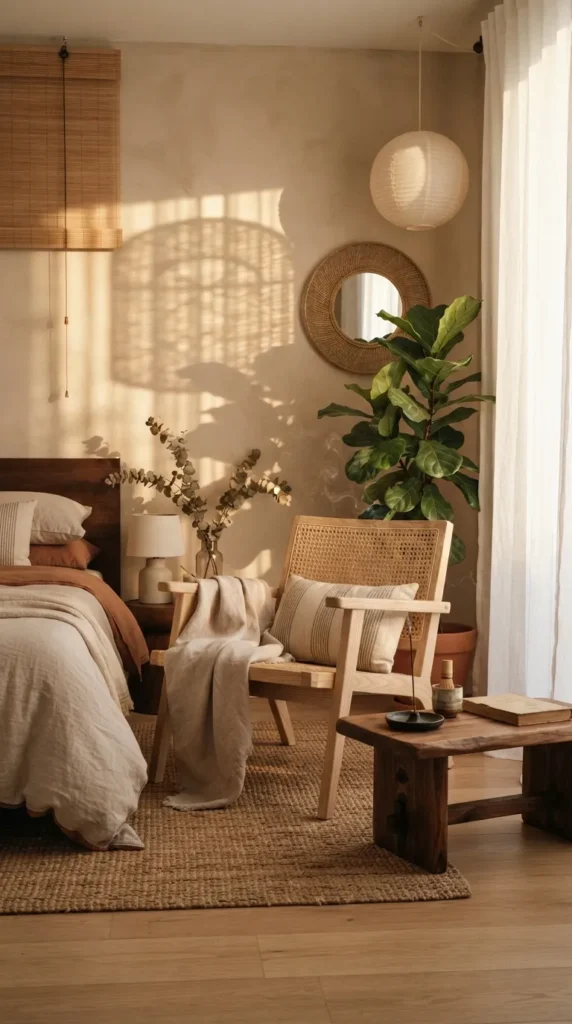
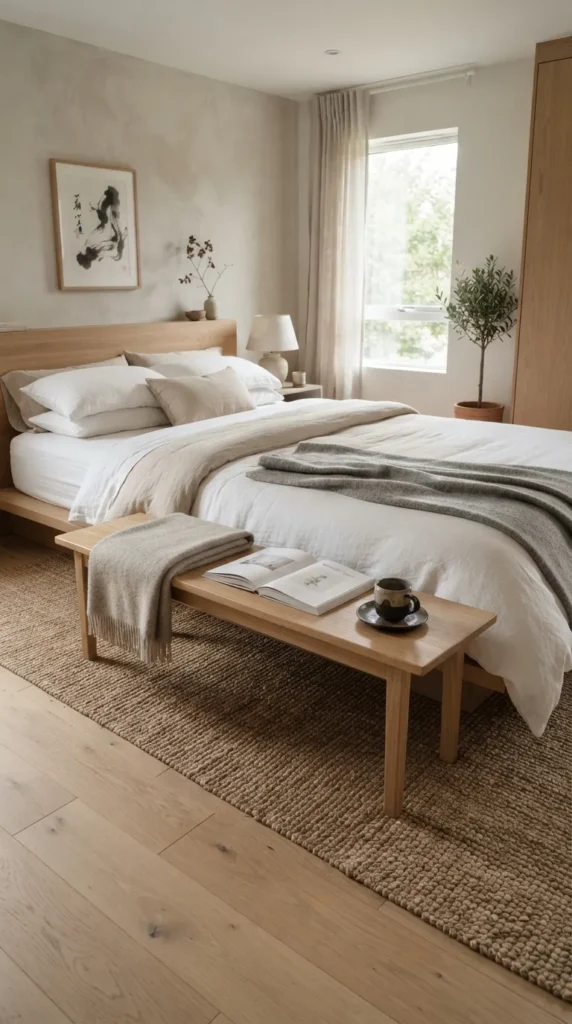
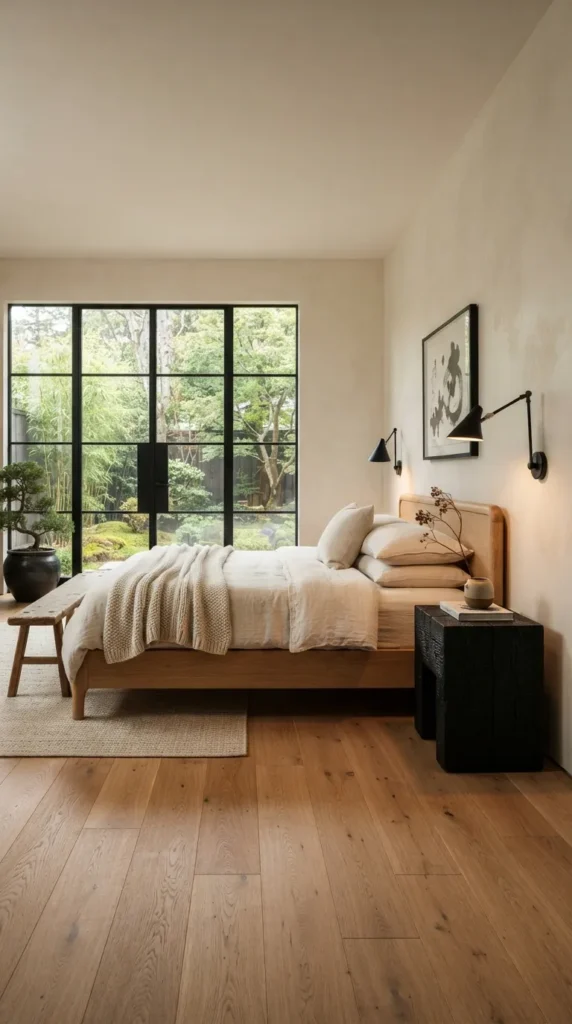
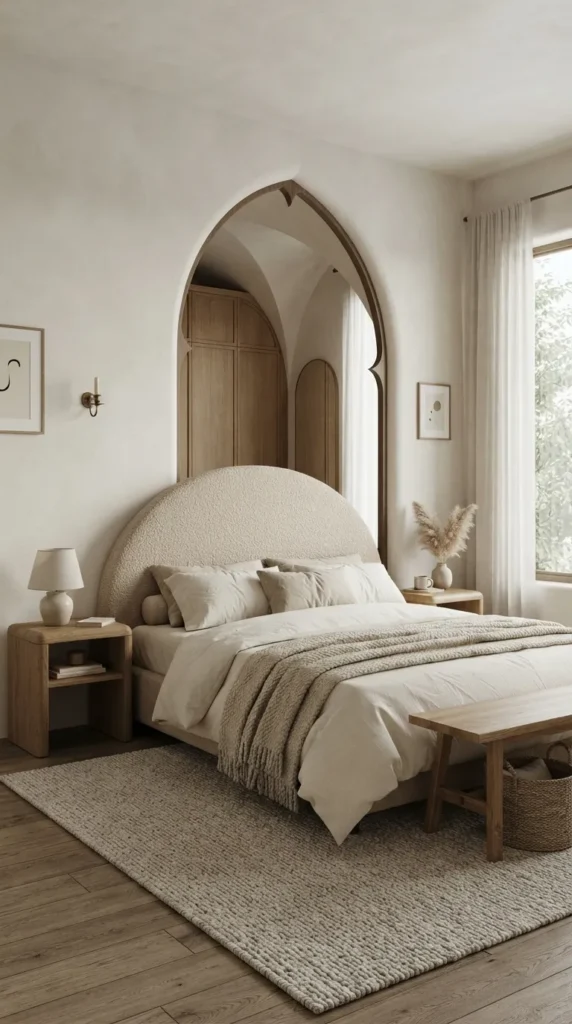
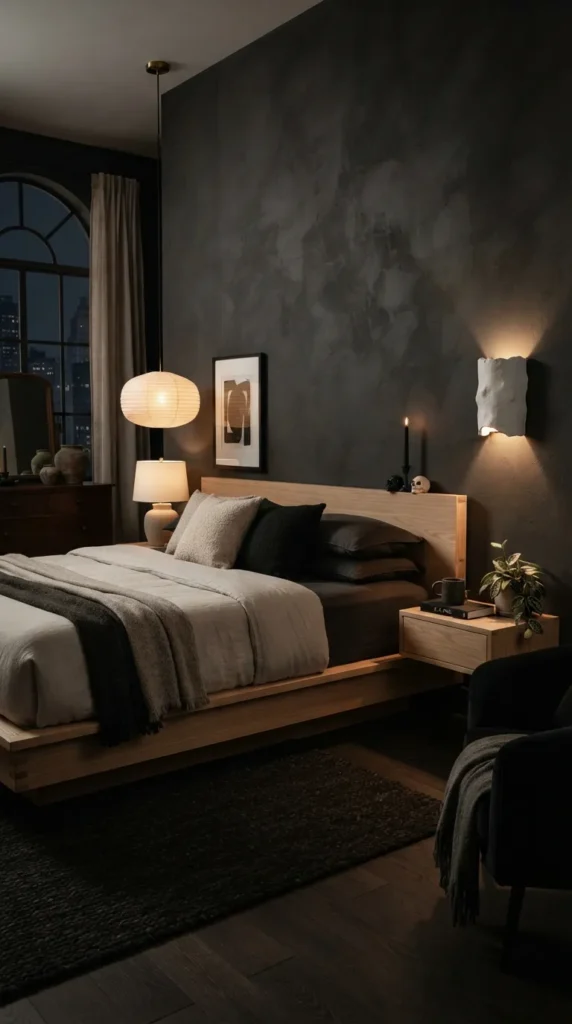
15. Minimalist Low-Line Bench with Styled Reading Perch
A low bench placed at the foot of the bed or along an open window wall offers a functional perch without cluttering sightlines.
- What This Idea Means: It echoes Scandinavian bench craftsmanship and Japanese entryway design, providing a spot for reflection, reading, or dressing.
- How to Make It:
- Select an elongated bench made from solid ash, oak, or hinoki wood featuring visible joinery (mortise and tenon).
- Top one half of the bench with a slim linen seat cushion or a soft shearling pelt.
- Style the remaining timber surface with a low stack of art books and a small ceramic teacup or incense burner.
- Keep the floor beneath the bench completely clear.
- Tips & Variations:
- Tip: Maintain the bench height between 14 and 16 inches so it stays slightly lower than the bed mattress.
- Variation: Select a bench with a woven natural Danish paper cord seat to blend Scandinavian craft with Japanese aesthetic balance.
16. Natural Jute, Sisal, & Flat-Weave Wool Rugs
Rugs in Japandi spaces provide tactile interest and acoustic comfort while maintaining an organic, neutral palette.
- What This Idea Means: It grounds furniture groupings and introduces raw, sustainable plant and animal fibers underfoot.
- How to Make It:
- Measure the bedroom to ensure the rug extends at least 24–36 inches beyond all sides of the bed frame.
- Choose high-density flat-weave wool, unbleached jute, bleached sisal, or a blended wool-linen rug.
- Stick to un-dyed patterns: subtle ribbing, subtle basketweaves, or gentle geometric high-low carved piles.
- Anchor the rug with a premium non-slip felt pad for extra cushion and stability.
- Tips & Variations:
- Tip: If pure jute feels too rough for bare feet, opt for a looped wool-and-viscose blend that mimics the look of jute while staying soft.
- Variation: Layer an asymmetrical, organic-shaped natural wool rug slightly askew over a foundational neutral flat-weave.
17. Deep Matte Black & Charcoal Contrasting Accents
While Japandi relies predominantly on light woods and neutral tones, matte black elements anchor the room and add modern refinement.
- What This Idea Means: Drawing inspiration from Japanese shou sugi ban (charred timber) and Nordic modernism, dark accents provide visual structure.
- How to Make It:
- Introduce black intentionally through slim elements: thin metal window mullions, matte black reading lamps, door hardware, or furniture legs.
- Select a single statement piece, such as a black-stained oak bench, a dark charred side table, or a black metal frame chair.
- Ensure all dark surfaces have a flat matte or satin oil finish to avoid reflective glare.
- Balance each black element with plenty of surrounding light oak and warm white walls.
- Tips & Variations:
- Tip: Keep black accents to roughly 10–15% of the room’s total color palette to maintain an open, peaceful feel.
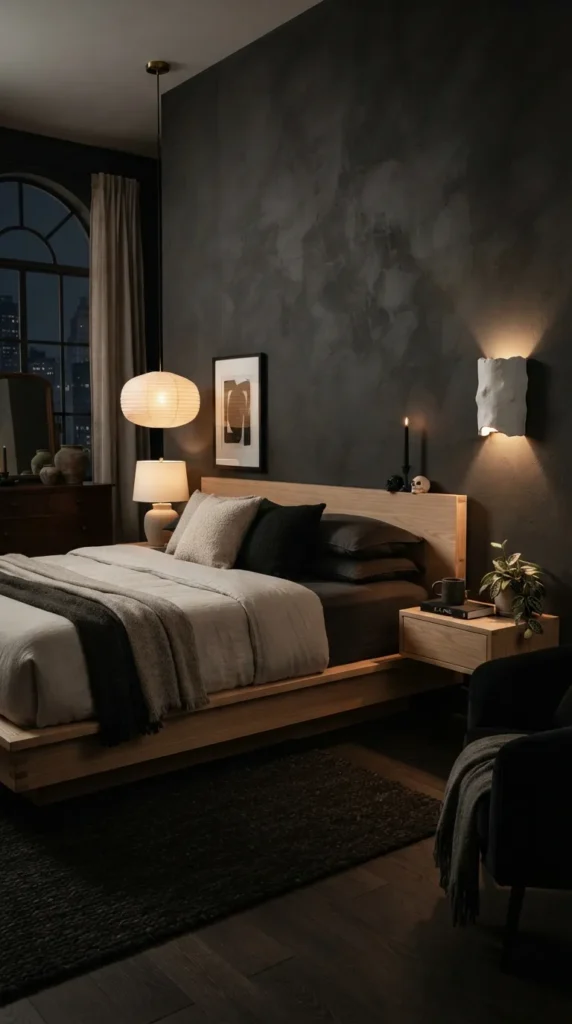
- Variation: Apply a deep charcoal lime paint finish to a single niche or behind a floating headboard for dramatic, moody contrast.
18. Recessed Headboard Niche with Warm Integrated LED Strip
Built-in architectural niches eliminate bulky bedside furniture by incorporating storage and lighting directly into the wall structure.
- What This Idea Means: It creates a clean, flush appearance that blends bedside utility directly into the architectural shell.
- How to Make It:
- Build a faux drywall stud wall or half-height timber ledge (approx. 4–6 inches deep) behind the bed.
- Cut a continuous horizontal display niche running the full width of the headboard wall.
- Install an upward- or downward-facing aluminum channel fitted with a diffused warm-white LED strip (2400K, 90+ CRI).
- Finish the interior of the niche in wood veneer or smooth microcement.
- Tips & Variations:
- Tip: Connect the LED driver to an accessible bedside dimmer switch for seamless adjustments from bed.
- Variation: Line only the interior back wall of the niche with ribbed oak slats while keeping the surrounding wall smooth plaster.
19. Woven Cane, Rattan, & Paper Cord Furniture Elements
Airy, woven furniture introduces subtle transparency and rich texture without adding visual weight.
- What This Idea Means: It bridges Japanese cane weaving with mid-century Scandinavian furniture traditions (such as Hans Wegner cane seating).
- How to Make It:
- Incorporate pieces featuring open-weave cane mesh or hand-woven paper cord: an accent chair, a bed headboard, or wardrobe doors.
- Select natural, unbleached rattan or honey-toned wicker paired with solid ash framing.
- Place woven items where natural sunlight passes through the weave to cast delicate shadow patterns on the floor.
- Protect natural cane by maintaining indoor humidity levels between 40% and 60%.
- Tips & Variations:
- Tip: Keep woven surfaces free of clutter to highlight the craftsmanship of the pattern.
- Variation: Choose an accent lounge chair featuring wide natural leather webbing or woven linen strapping in a warm camel tone.
20. Zen Meditation Corner with Zafu Cushion & Low Tea Table
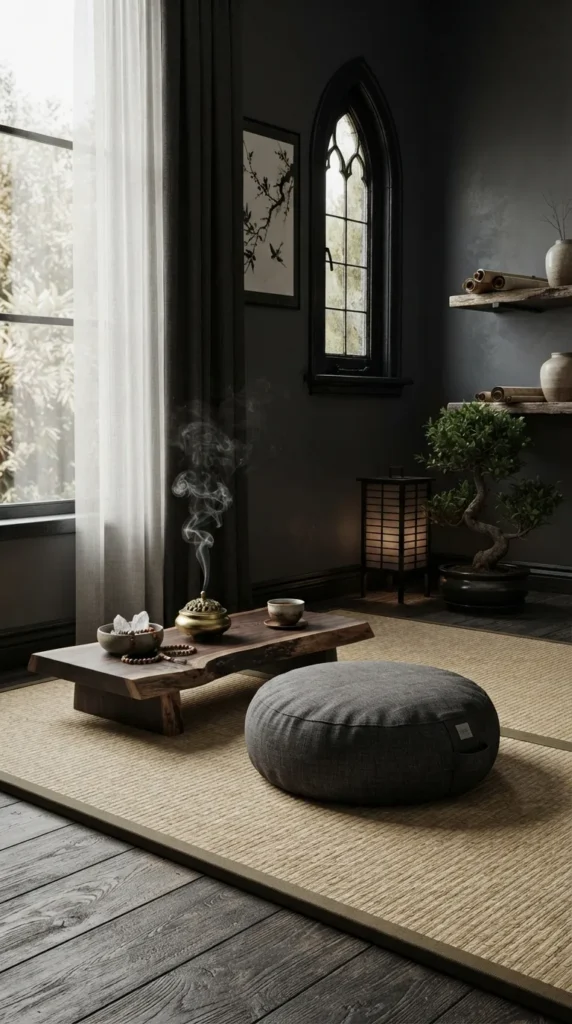
A dedicated relaxation corner provides a quiet spot for mindfulness, journaling, and calm reflection away from digital screens.
- What This Idea Means: It honors the meditative roots of Japanese design, creating an intentional space for quiet mornings and restful evenings.
- How to Make It:
- Clear a quiet bedroom corner adjacent to a window with filtered natural light.
- Lay down a single woven rush mat, sheepskin, or small round woven jute rug.
- Place a firm buckwheat meditation cushion (zafu) alongside a flat rectangular support mat (zabuton).
- Add a low, raw-edge solid wood tea plinth styled with a brass incense burner, a ceramic bowl, and a journal.
- Tips & Variations:
- Tip: Keep this zone entirely free of digital devices, wires, and work items to preserve its calming function.
- Variation: Add a hanging paper lantern directly above the meditation cushion on a low-drop cord with an independent dimmer switch.