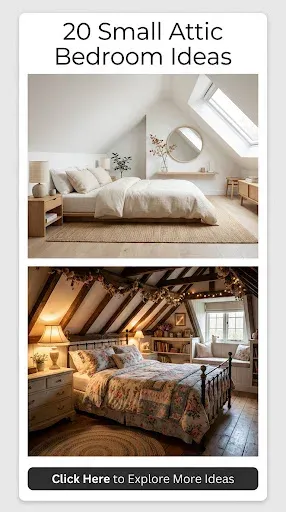
Maximizing the Slope: The Low-Profile Platform Bed

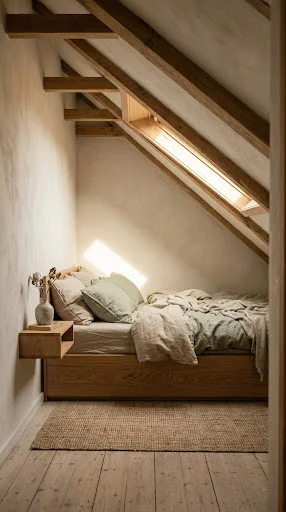
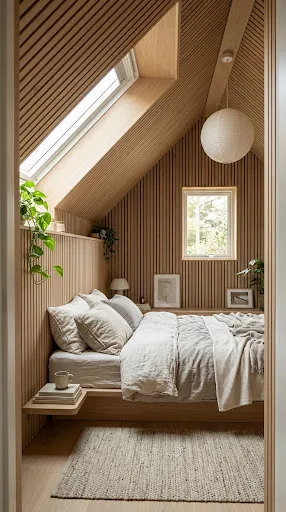
When dealing with the unique architectural angles of an attic, the biggest challenge is often the lack of vertical wall space. To make the most of a dramatic slope, place a low-profile platform bed directly beneath the lowest point of the ceiling. By keeping the bed close to the floor, you instantly create the illusion of higher ceilings and a more open, airy atmosphere. Opt for a minimalist wooden platform or a simple upholstered base without a headboard. This prevents the furniture from competing with the ceiling’s natural angles and turns an otherwise awkward nook into a cozy, intentional sleeping sanctuary.
To enhance this setup, keep your bedding light and textured. Think linen sheets in soft oatmeal, crisp white, or muted sage. Instead of a bulky bedside table, use a floating shelf or a simple stack of art books to hold your evening essentials. This keeps the floor area clear, allowing light to flow uninterrupted across the room and making the entire attic feel spacious and thoughtfully curated.
The Monochromatic Mirage: Expanding Space with White-on-White
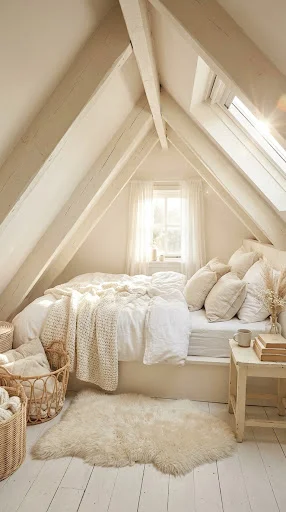
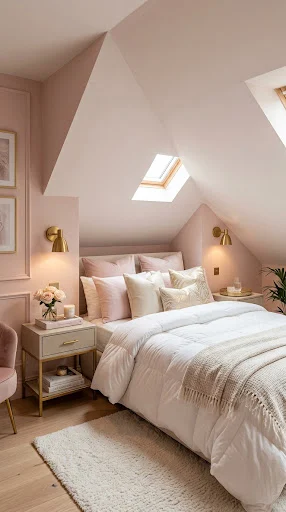
One of the oldest and most effective design secrets for small, angular spaces is the monochromatic color palette. Painting your attic walls, ceiling, and exposed beams in a single shade of brilliant white or soft cream erases the visual boundaries of the room. When the eye cannot easily detect where the wall ends and the sloped ceiling begins, the space feels infinitely larger and brighter. This technique also maximizes the natural light bouncing around the room, turning a potentially dark, cramped loft into a sun-drenched oasis.
To prevent a white-on-white room from feeling sterile or cold, texture is your best friend. Layer different materials throughout the space: a chunky knit throw blanket, a plush sheepskin rug, woven rattan baskets, and sheer linen curtains. These tactile elements add depth and warmth, ensuring your minimalist monochromatic attic feels incredibly cozy, inviting, and rich with character.
Built-In Bed Nooks: Cozy Cabin Vibes
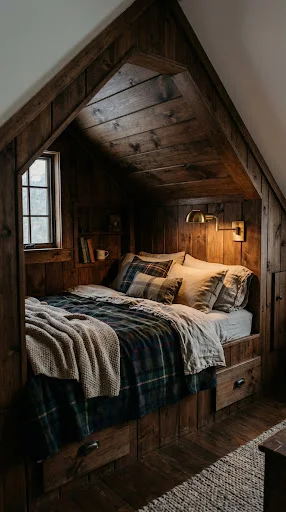
Embrace the tight proportions of your small attic by transforming a recessed wall or a low eaves area into a custom built-in bed nook. Channeling the charm of a rustic cabin or a luxury ship cabin, a built-in bed utilizes every square inch of available space. By enclosing the sleeping area on three sides, you create an incredibly secure, cocoon-like environment that feels like a private retreat from the rest of the world.
To make this setup highly functional, incorporate storage drawers directly beneath the bed frame and build small niches into the wood paneling at the head of the bed to serve as built-in nightstands. Install a brass swing-arm sconce for reading light without sacrificing surface space. Finish the look with warm wood paneling or a deep, moody paint color inside the nook to contrast with the rest of the attic, creating a stunning visual focal point.
The Skylight Sanctuary: Sleeping Under the Stars
If your attic features a skylight, position your bed directly beneath it. There is nothing more magical than falling asleep while gazing at the stars and waking up to the gentle glow of morning light. A skylight naturally draws the eye upward, emphasizing the height of the room and making even the smallest attic feel connected to the vast sky outside.
To control the light for sleeping, install a custom remote-controlled blackout blind that matches your ceiling color. Keep the surrounding decor simple and nature-inspired to complement the outdoor view. Think potted hanging plants hanging from the beams, natural wood accents, and a color palette of soft blues, greens, and earthy terracotta. This layout turns your attic bedroom into a serene, observatory-like sanctuary.
Smart Eaves Storage: Seamless Custom Cabinetry
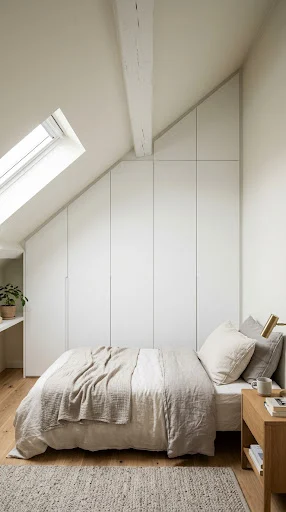
The triangular spaces beneath attic eaves are notoriously difficult to furnish with standard, store-bought dressers. Instead of leaving this valuable real estate unused, invest in custom built-in cabinetry designed to mirror the exact angle of the slope. By installing flush-mount drawers and cabinets that blend seamlessly into the walls, you gain massive amounts of storage without cluttering the floor plan.
Paint the cabinet doors the exact same color as the walls and use touch-latches or minimalist flush pulls instead of bulky hardware. This creates a clean, uninterrupted visual line that makes the room feel streamlined and organized. You can even leave a few open cubbies within the built-ins to display your favorite books, ceramics, or small trailing plants, adding a personal touch to the functional storage.
Bohemian Rhapsody: Plants, Rattan, and Low Seating
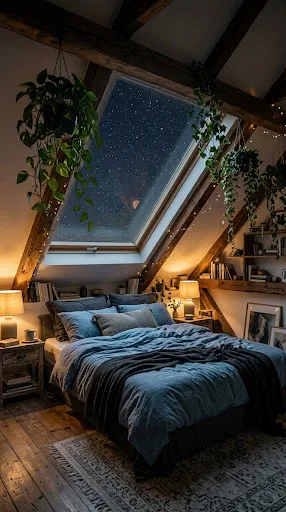
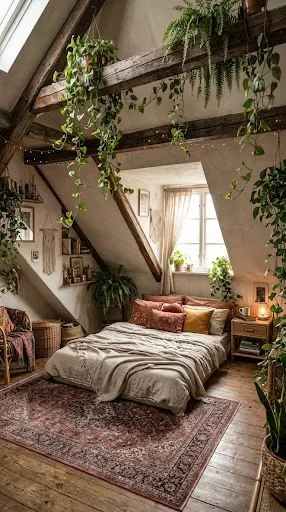
An attic bedroom is the perfect canvas for a whimsical, bohemian aesthetic. The unusual angles and cozy proportions naturally lend themselves to a relaxed, free-spirited style. Start with a low-to-the-ground futon or mattress, and layer it with an abundance of textured textiles, including Moroccan wedding blankets, fringed pillows, and vintage Persian rugs. Use warm, earthy tones like mustard yellow, terracotta, and deep rust to ground the space.
Introduce natural materials like rattan, bamboo, and wicker through accent chairs, laundry baskets, and light fixtures. To bring the space to life, hang trailing plants like pothos or English ivy from the highest points of the ceiling beams, letting their green vines drape down the sloped walls. The combination of lush greenery, warm wood, and soft textiles creates an enchanting, dreamlike escape.
The Glass Partition: Defining Zones Without Walls
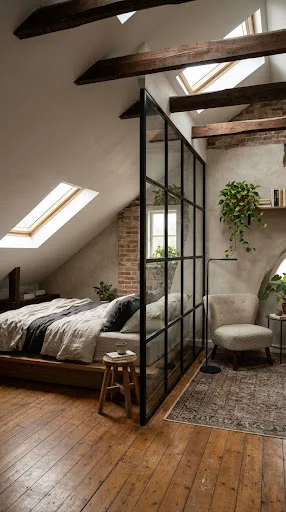
In a small studio attic where you need to combine a bedroom with a small living area or home office, solid walls can make the space feel dark and boxed-in. Instead, use a sleek black-framed glass partition or a crittall-style screen to divide the zones. This architectural element adds a touch of modern industrial elegance while allowing natural light to flow freely from one end of the attic to the other.
The glass wall provides a clear visual boundary for your sleeping area, giving it a sense of privacy and structure without sacrificing the open, airy feeling of the loft. To add temporary privacy when sleeping, you can hang a lightweight linen curtain behind the glass panel that can be easily drawn closed or pulled aside during the day.
Vertical Wall Panels: Creating the Illusion of Height
If your attic ceilings are exceptionally low, you can visually stretch the room upward by using vertical wall paneling. Installing shiplap, beadboard, or modern wood slats vertically along the walls and up into the slopes of the ceiling coaxes the eye to look upward, making the walls feel significantly taller than they actually are.
For a modern, Scandinavian look, use light oak or birch slats with thin gaps between them. This adds incredible architectural texture and warmth to the room. If you prefer a classic cottage feel, go with traditional beadboard painted in a soft pastel shade like dusty blue, sage green, or warm cream. Pair this vertical texture with simple, low-slung furniture to maximize the newfound sense of height.
The Floating Closet: Open and Airy Wardrobe Solutions
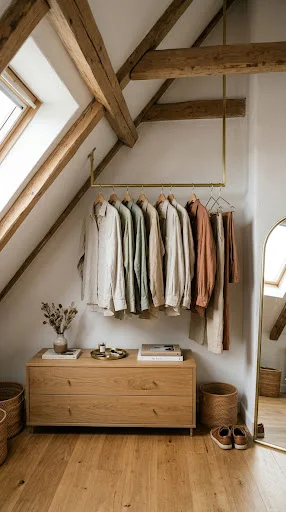
Traditional, heavy wooden wardrobes can completely overwhelm a small attic, blocking light and making the space feel cramped. Embrace a modern, minimalist approach by creating an open “floating” closet. Install a heavy-duty wooden or brass clothing rail directly from the sloped ceiling beams, and place a low, sleek chest of drawers underneath it.
This open wardrobe system keeps your favorite clothing pieces on display, acting as a design feature while keeping the floor area open and light. To keep this look successful, curation is key: hang your most beautiful coats, linen shirts, and dresses, and store folded items, shoes, and accessories neatly in the drawers below or in matching baskets. It is a stylish, boutique-hotel-inspired solution for tight quarters.
Moody and Cozy: Embracing Deep, Dark Hues
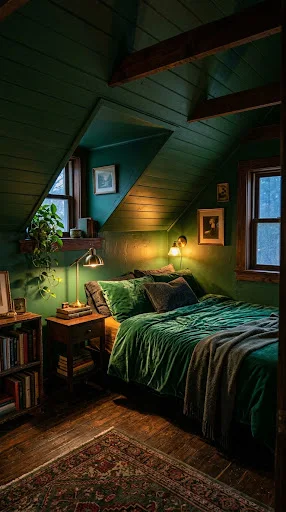
While light colors are excellent for making a space feel larger, there is a strong case to be made for doing the exact opposite in an attic. Embracing the small, enclosed nature of the room by painting it in deep, rich, moody tones can turn it into an incredibly cozy, jewel-box-like retreat. Colors like charcoal grey, forest green, deep navy, or rich burgundy work beautifully on sloped ceilings.
When you paint both the walls and the ceiling in a dark shade, the corners of the room recede into the shadows, creating a cozy, infinite feel. To balance the dark walls, incorporate warm metallic accents like brass or gold light fixtures, rich wood furniture, and plush velvet textiles. Soft, warm lighting from bedside lamps and candles will catch these textures, creating a luxurious and intimate atmosphere.
The Hidden Office: Multi-Functional Corner Desks
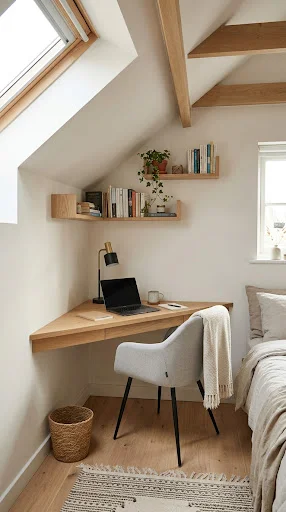
With the rise of remote work, finding space for a home office is a priority for many. A small attic bedroom can easily pull double duty by utilizing an under-the-eaves corner for a compact workspace. Choose a floating desk that mounts directly to the wall, or a custom triangular desk designed to fit perfectly into a corner. This keeps the floor underneath clear, maintaining a spacious feel.
Pair the desk with a stylish, low-profile chair that can be tucked completely under the desktop when not in use. Install floating shelves above the desk for storage, and use wireless, rechargeable task lighting to avoid a clutter of cords. By keeping the workspace neat and visually integrated into the room’s design, you can easily transition from productive work hours to a restful night’s sleep.
Exposed Structural Beams: Celebrating Architectural Character
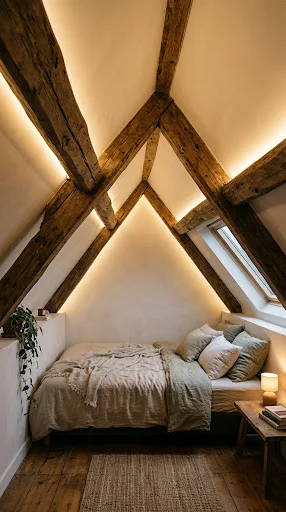
Many attics feature beautiful, historic structural beams that are often hidden behind drywall. If your attic has these architectural gems, celebrate them! Stripping away plaster to expose natural wood beams adds instant history, character, and warmth to a bedroom. The rustic texture of the wood contrasts beautifully with smooth, modern plaster walls.
To highlight the beams, install subtle LED strip lighting along their top edges to cast a soft, warm glow upward onto the ceiling. Keep the rest of the room’s decor relatively simple and understated to let the natural woodwork take center stage. Use neutral bedding, simple iron light fixtures, and natural wood furniture that complements the tone of the exposed beams.
The Mirrored Wall: Doubling the Visual Space
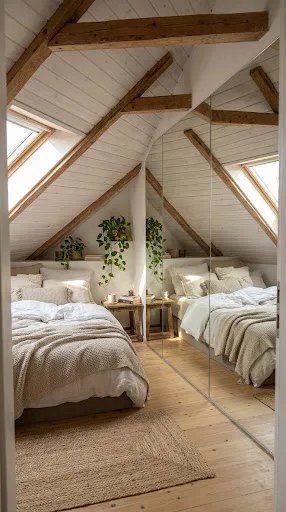
Mirrors are a classic design tool for expanding small spaces, and they work wonders in an attic bedroom. Placing a large, custom-cut mirror on a flat end wall—or even along the sloped ceiling—reflects the entire room and any incoming natural light, instantly doubling the perceived size of the space.
For a sleek, modern look, install a floor-to-ceiling frameless mirror that covers an entire wall. If you prefer a softer, more vintage aesthetic, lean a massive, ornate gilded mirror against the strongest wall. The reflection of the sloped ceilings and cozy textiles creates a beautiful, surreal depth that makes your attic bedroom feel incredibly grand and light-filled.
Chic Wallpaper Accents: Adding Depth to Slopes
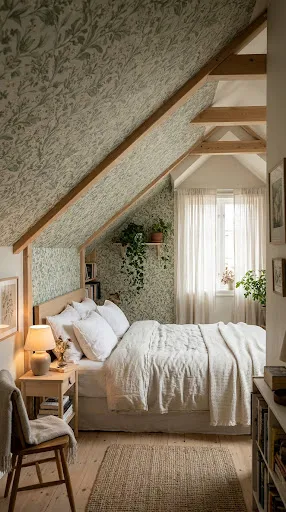
Don’t be afraid of pattern in a small space! Using wallpaper on a single accent wall—such as the headboard wall or the largest sloped surface—can add incredible depth, personality, and whimsy to an attic bedroom. Opt for delicate florals, subtle botanical prints, or soft geometric patterns that bring visual interest without overwhelming the room.
To make the wallpaper look seamless, choose a pattern with a light background that matches the paint color of the surrounding walls. This ensures a smooth visual transition. Wallpapering a sloped ceiling can create a beautiful, canopy-like effect, wrapping the room in a cozy embrace and turning the unique architecture into a stunning work of art.
The Hanging Chair: Whimsical and Space-Saving Seating
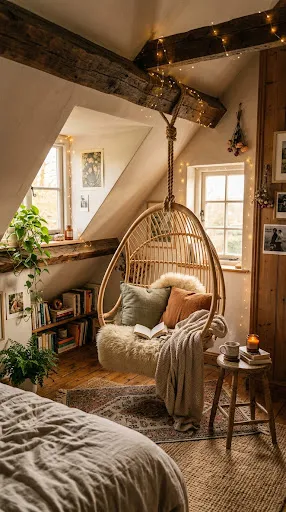
In a small bedroom, finding space for a comfortable reading chair can be difficult. A hanging rattan chair or a fabric hammock swing is the perfect solution for an attic. Suspended directly from a sturdy ceiling beam, a hanging chair keeps the floor completely clear, allowing light to pass underneath and maintaining a spacious feel.
Tuck the hanging chair into a cozy corner near a window or under a low slope. Layer it with a plush faux-fur rug and a soft throw pillow to create the ultimate reading nook. The gentle swaying motion adds a playful, relaxing, and whimsical element to the room, making it a favorite spot to unwind with a good book.
Japanese Zen: Low-to-the-Ground Minimalism
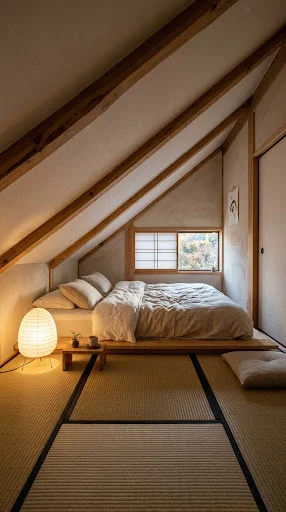
Embrace the serene, clutter-free philosophy of Japanese design to make your small attic feel like a peaceful, spacious retreat. Ground the room with a traditional tatami mat or a ultra-low wooden platform bed. By keeping all the furniture as close to the floor as possible, you maximize the vertical space and create a calm, grounded energy.
Choose a restricted color palette of warm neutrals, soft greys, and natural wood tones. Keep decor to an absolute minimum: a single piece of beautiful ceramic art, a simple branch in a vase, and soft paper lantern lighting. This intentional lack of clutter allows the mind to rest and makes the physical space feel open, clean, and incredibly tranquil.
The Daybed Daydream: Flexible Lounging and Sleeping
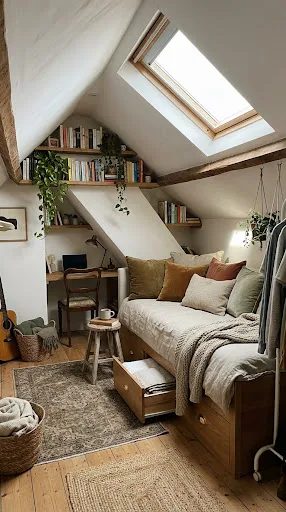
If your attic bedroom functions primarily as a guest room, playroom, or secondary living space, a daybed is the perfect furniture choice. Positioned against a wall, a daybed serves as a chic, comfortable sofa during the day, piled high with decorative cushions and throws. At night, it easily transitions into a cozy twin or double bed for guests.
Choose a daybed frame with built-in drawers underneath to maximize storage for extra linens, blankets, and pillows. This flexible layout keeps the center of the room open for movement, making the attic feel like a multi-functional lounge rather than just a cramped bedroom. It’s a smart, stylish solution for maximizing utility in tight quarters.
A Touch of Glamour: Brass Accents and Soft Pastels
Transform a small attic from simple to stunningly sophisticated by introducing a soft pastel color palette paired with gleaming brass accents. Shades of blush pink, lavender, mint green, or soft powder blue work beautifully on sloped ceilings, reflecting light while adding a gentle, cheerful personality to the space.
Incorporate elegant brass details through wall sconces, drawer pulls, bedside tables, and frame borders. The warm, metallic glint of brass adds a touch of modern luxury and sophistication, catching the light and drawing the eye around the room. Pair these elements with plush velvet textiles and crisp white linens for a chic, boutique-hotel-inspired finish.
The Window Seat Escape: Utilizing Dormer Windows
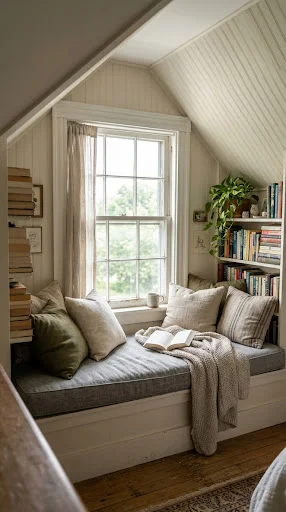
If your attic features a classic dormer window, you have the perfect opportunity to build a custom window seat. A built-in bench nestled directly into the window alcove provides a comfortable spot to sit, read, and enjoy the view, while making excellent use of a space that is often too small for standard furniture.
Design the window seat with a lift-up top or deep drawers underneath to create hidden storage for books, seasonal clothes, or extra bedding. Top the bench with a custom-fit thick foam cushion covered in a durable, textured fabric, and add a few plump throw pillows. This cozy nook instantly becomes the charming focal point of the entire bedroom.
Warm Industrial: Brick, Metal, and Warm Wood
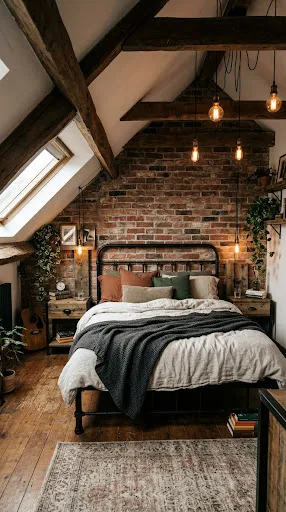
For an attic with a slightly edgy, urban vibe, go for a warm industrial aesthetic. If you are lucky enough to have an exposed brick chimney breast or wall, leave it bare to showcase its rich, rugged texture. Contrast the rough brick with smooth plaster walls painted in a soft, warm grey or off-white.
Incorporate furniture made from reclaimed wood and matte black steel, such as a simple pipe-frame bed or minimalist floating shelves. To keep the industrial look from feeling cold, layer in plenty of warmth through textiles: thick wool rugs, leather accent cushions, and heavy waffle-weave blankets. Industrial-style Edison bulb pendant lights hanging from the beams complete this stylish, loft-inspired look.