A forest‑inspired bedroom is more than a style; it’s a mood. It invites calm, slow mornings, and restorative sleep by bringing the textures, colors, and quiet rhythms of the woods indoors. These 21 tranquil designs translate forest atmosphere into practical bedroom plans—each idea includes materials, color palettes, lighting strategies, storage solutions, and styling tips so you can recreate the feeling of a woodland retreat no matter your square footage or budget. Pin the concepts you love and adapt them to your home.
1. Canopy of Green
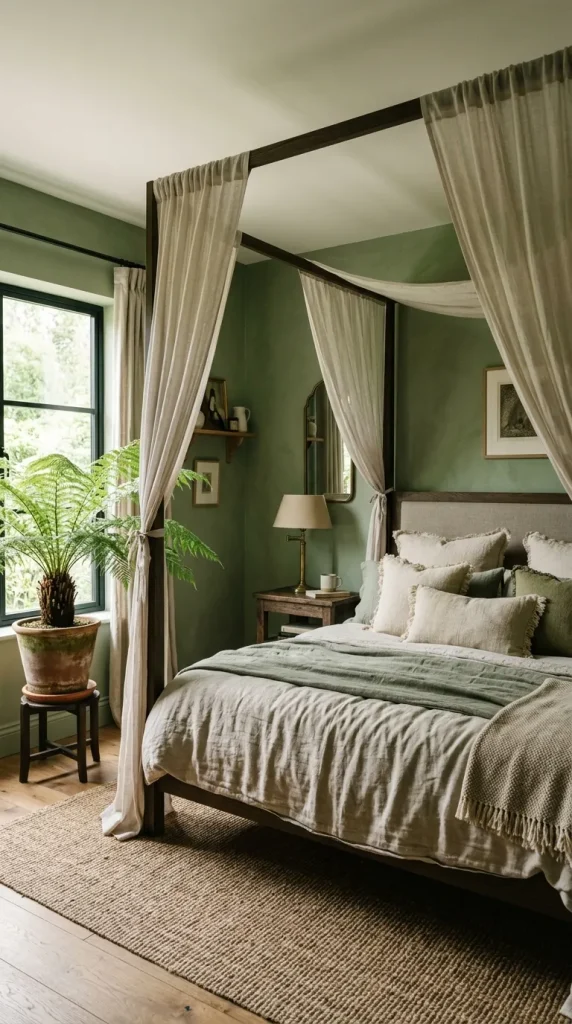
Create a soft canopy effect with layered greens that mimic the dappled light beneath trees. Use a muted palette of moss, sage, and olive with warm wood tones to anchor the room.
Key elements
- Walls: Paint the main wall in a soft moss green; keep the remaining walls a warm off‑white to maintain brightness.
- Ceiling: Consider a very pale green or leave white to keep the room feeling open.
- Bed: Choose a low wooden bed with a simple headboard; drape a lightweight linen canopy or sheer fabric overhead to suggest branches.
- Textiles: Layer linen sheets, a wool throw, and velvet cushions in tonal greens and warm neutrals.
- Lighting: Use warm, dimmable pendant lights and a few amber glass bedside lamps to recreate sunset warmth.
Styling tips
- Add a large potted fern or a fiddle‑leaf fig to reinforce the canopy theme.
- Use woven baskets and a reclaimed wood bench at the foot of the bed for storage and texture.
- Keep artwork minimal—one botanical print or a pressed‑leaf frame is enough.
Why it works The canopy effect creates a sense of shelter and intimacy while the layered greens evoke the forest’s calming palette.
2. Rustic Timber Cabin
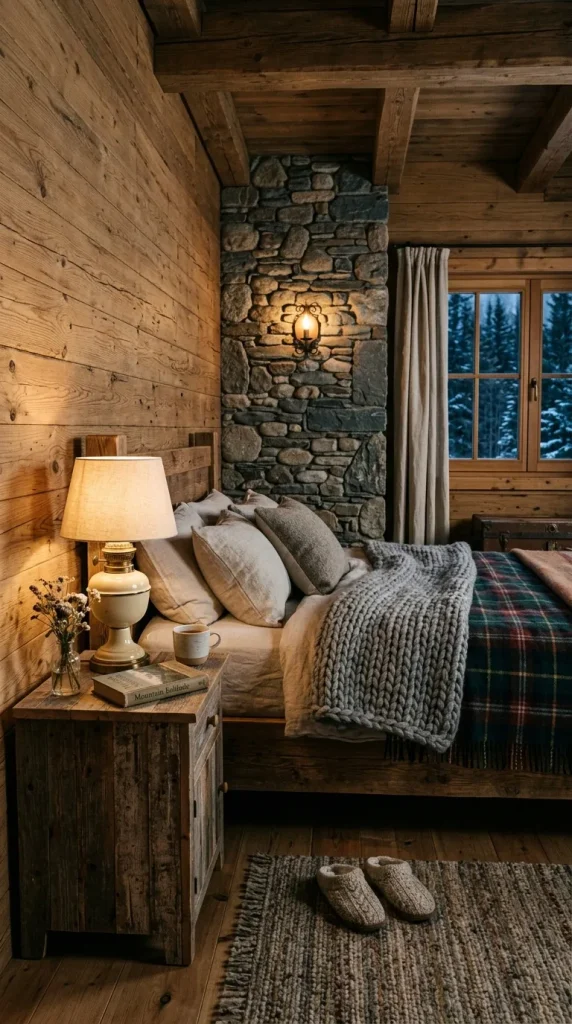
Channel the tactile comfort of a forest cabin with exposed wood, natural stone accents, and cozy textiles. This design feels grounded and timeless.
Key elements
- Walls and floors: Use warm, wide‑plank wood flooring and a wood‑clad accent wall behind the bed.
- Furniture: Choose a solid wood bed, a simple dresser, and a bench with visible joinery.
- Accents: Introduce a stone hearth or a faux stone panel as a focal point if space allows.
- Textiles: Heavy wool blankets, shearling throws, and handwoven rugs add warmth.
- Lighting: Use wall sconces with Edison bulbs and a central pendant in aged metal.
Styling tips
- Display a few well‑chosen vintage items—an enamel mug, a carved wooden bowl—to add character.
- Keep bedding neutral and add color through layered throws and pillows in rust, deep green, or navy.
- Use a trunk or cedar chest for extra storage and scent.
Why it works Rustic timber elements create a tactile, lived‑in feel that mirrors the comfort of a forest cabin without feeling kitschy.
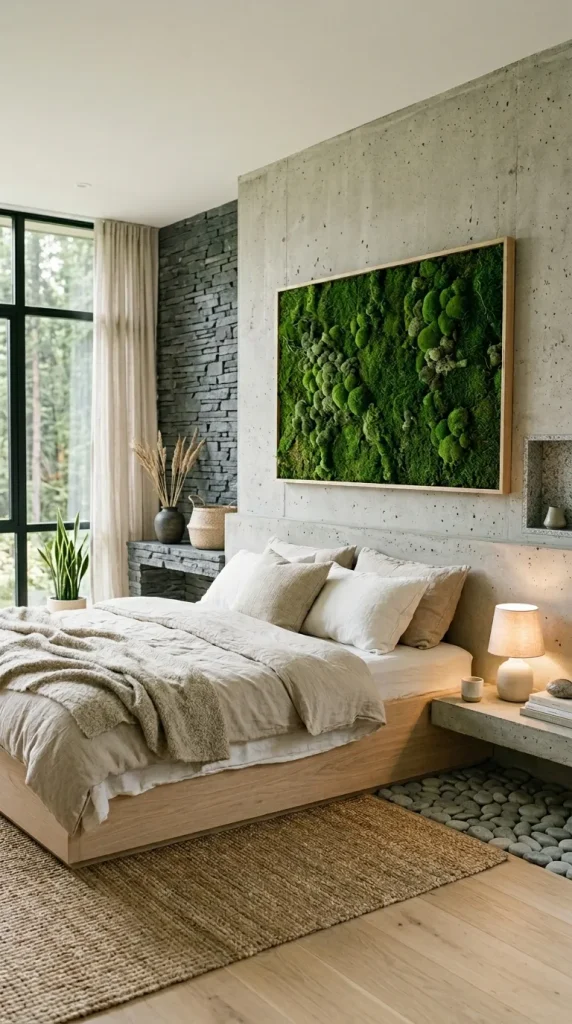
3. Moss and Stone Minimalism
For a modern take, pair mossy greens with cool stone textures and clean lines. This approach is calm, refined, and ideal for small bedrooms.
Key elements
- Palette: Soft moss green, dove gray, and warm white.
- Surfaces: Use a stone or concrete bedside ledge and a simple platform bed in pale wood.
- Accents: Incorporate a living moss panel or a framed preserved moss artwork as a focal point.
- Textiles: Choose crisp linen bedding and a textured wool rug in neutral tones.
- Lighting: Minimal recessed lighting plus a sculptural bedside lamp in matte black or brass.
Styling tips
- Keep surfaces uncluttered; let the moss feature and a single ceramic vase speak for themselves.
- Use hidden storage under the bed to maintain the minimalist aesthetic.
- Add a small tray with a candle and a book for a human touch.
Why it works The contrast of organic moss and cool stone creates a serene, spa‑like atmosphere that feels both modern and natural.
4. Woodland Layering with Pattern
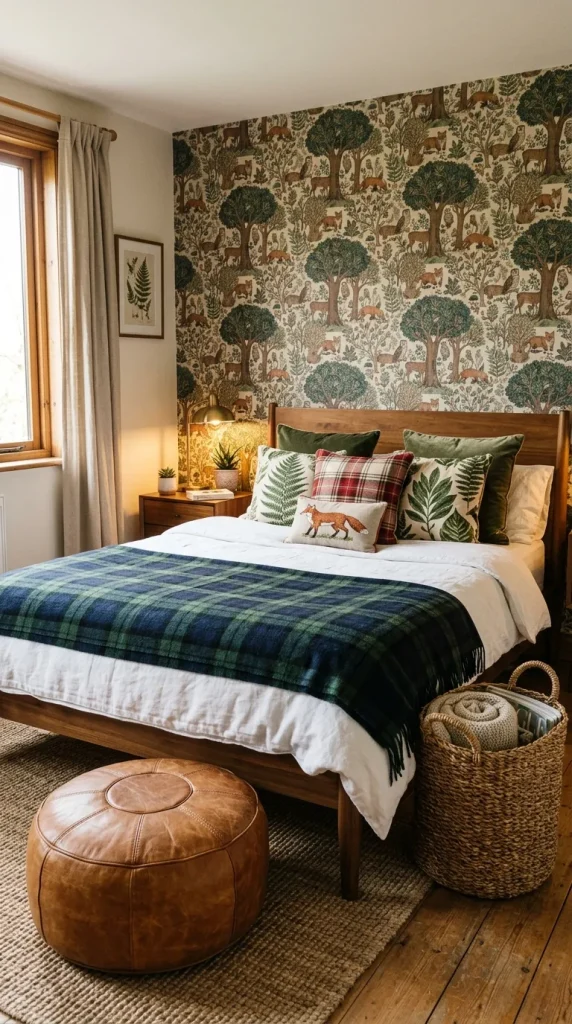
Bring the forest to life with layered patterns inspired by bark, leaves, and forest floor textures. This design is cozy, collected, and visually rich.
Key elements
- Walls: Neutral base with one accent wall in a subtle leaf or bark‑inspired wallpaper.
- Bedding: Mix patterned quilts, plaid throws, and botanical cushions in a cohesive color story.
- Furniture: Choose a mid‑century or Scandinavian bed frame to balance pattern with clean lines.
- Accents: Use woven baskets, a leather pouf, and a wooden ladder for blankets.
- Lighting: Table lamps with linen shades and a warm overhead fixture.
Styling tips
- Anchor the room with a large area rug that picks up the wallpaper tones.
- Keep patterns in the same tonal family to avoid visual clutter.
- Add a small stack of nature books and a ceramic mug to the bedside for a lived‑in feel.
Why it works Patterned layering evokes the forest’s complexity while careful color coordination keeps the look restful.
5. Evergreen Retreat
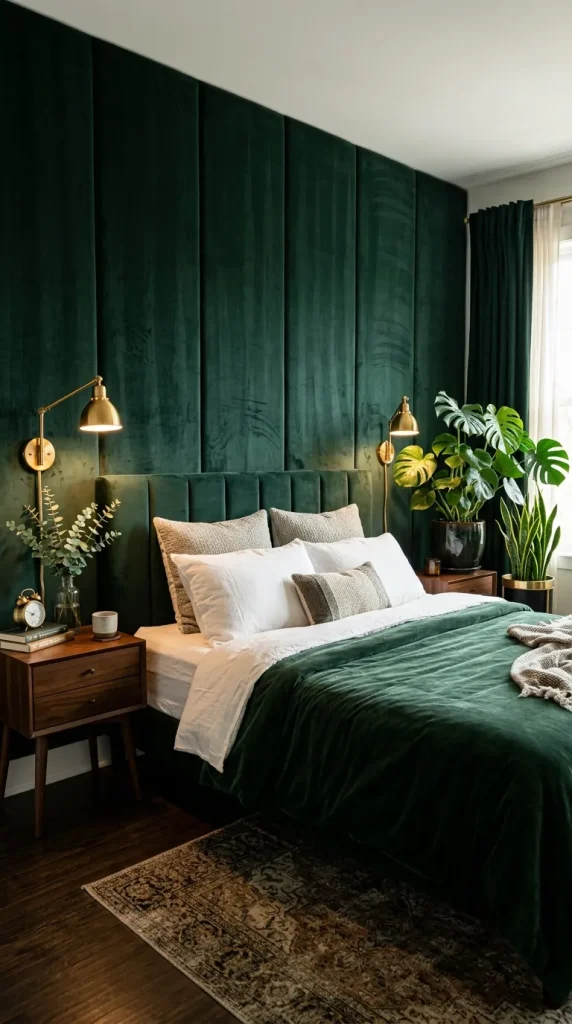
Make evergreen the hero color for a dramatic yet soothing bedroom. Deep greens paired with brass and dark wood feel luxurious and restful.
Key elements
- Walls: Paint three walls a soft neutral and the headboard wall a deep evergreen.
- Bed: Upholstered headboard in a complementary green or a dark wood bed with green bedding.
- Accents: Brass hardware, dark wood nightstands, and a plush area rug.
- Textiles: Velvet cushions, a cashmere throw, and high‑quality cotton sheets.
- Lighting: Brass sconces and a statement chandelier with warm bulbs.
Styling tips
- Use plants with glossy leaves to echo the evergreen palette.
- Keep artwork simple—black and white photography or a single abstract piece.
- Add a small bench upholstered in leather or wool at the foot of the bed.
Why it works Deep evergreen creates a cocooning effect that feels both elegant and intimately connected to the forest.
6. Sunlit Glade
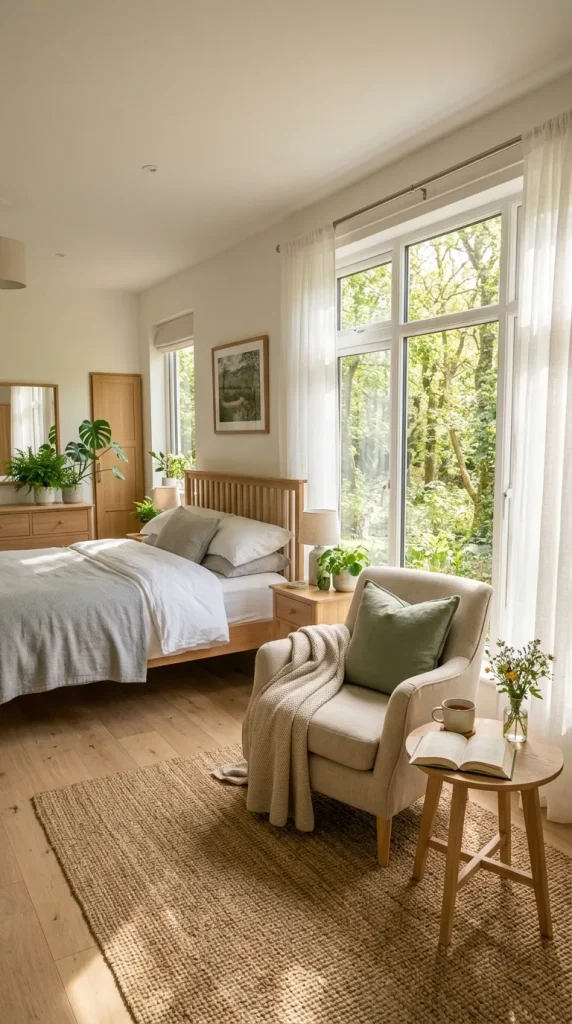
Design a bedroom that captures the bright, airy feeling of a sunlit forest glade. Light woods, soft greens, and abundant natural light make this style feel fresh and restorative.
Key elements
- Palette: Pale wood, soft sage, and creamy white.
- Furniture: Light oak bed, floating shelves, and a slim dresser.
- Windows: Maximize natural light with sheer curtains or woven shades.
- Textiles: Breathable linens, a light cotton throw, and a jute rug.
- Lighting: Use warm daylight bulbs and a few brass or rattan fixtures.
Styling tips
- Place a small reading chair near the window with a soft throw.
- Use glass vases with fresh cut branches or wildflowers to bring the glade indoors.
- Keep decor airy and minimal to emphasize light.
Why it works This approach feels uplifting and restorative—perfect for morning routines and quiet afternoons.
7. Mossy Nook with Built‑In Seating
Create a cozy reading nook that feels like a mossy clearing. Built‑in seating with storage and soft cushions makes the space functional and inviting.
Key elements
- Seating: Window seat or built‑in bench with deep cushions in mossy tones.
- Storage: Drawers beneath the seat for linens and books.
- Surfaces: Reclaimed wood shelf for plants and a small reading lamp.
- Textiles: Plush cushions, a knitted throw, and a small wool rug.
- Lighting: A flexible wall lamp for task lighting and fairy lights for ambiance.
Styling tips
- Add a stack of nature‑themed books and a ceramic mug tray.
- Use trailing plants to soften the edges and add movement.
- Keep the palette warm and layered for maximum coziness.
Why it works A mossy nook becomes a private retreat within the bedroom—a place to read, reflect, and breathe.

8. Forest Floor Palette
Take inspiration from the forest floor—earthy browns, mushroom grays, and leaf greens—to create a grounded, tactile bedroom.
Key elements
- Palette: Terracotta, mushroom gray, olive, and warm taupe.
- Materials: Clay pottery, raw linen, and stoneware lamps.
- Furniture: Low platform bed in walnut or reclaimed wood.
- Accents: A woven headboard, ceramic planters, and a stone bedside tray.
- Lighting: Soft, diffused lighting with amber tones.
Styling tips
- Use natural fiber rugs and layered throws to add warmth underfoot.
- Display a small collection of stones or pinecones in a shallow bowl for a subtle forest reference.
- Keep window treatments light to allow soft daylight.
Why it works The forest floor palette feels earthy and restorative, connecting the bedroom to natural cycles and textures.
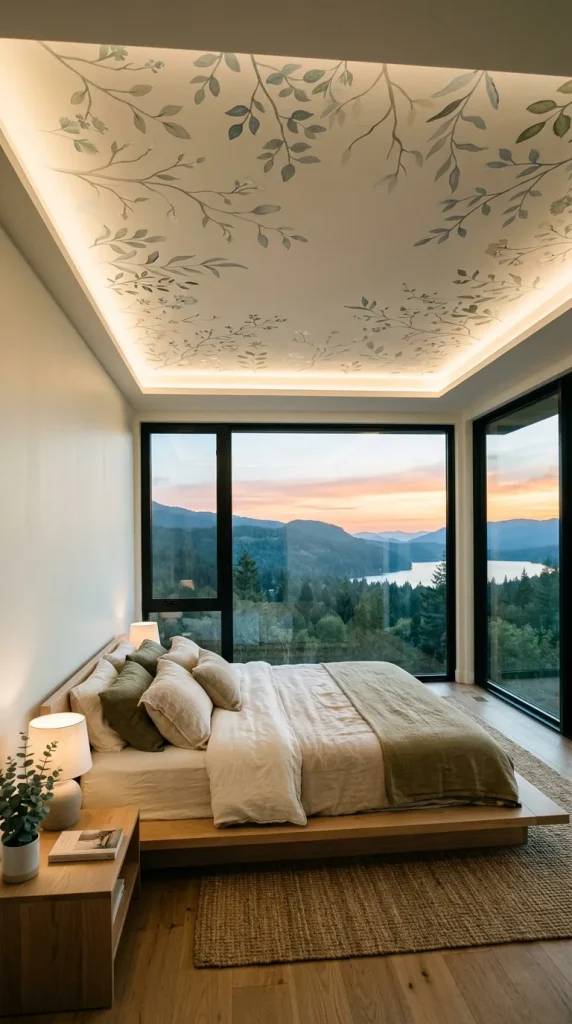
9. Canopy Ceiling Mural
Make the ceiling the focal point with a subtle canopy mural or painted branch motif. Looking up at leaves and sky creates a sense of being sheltered beneath trees.
Key elements
- Ceiling: Hand‑painted mural of soft branches and leaves in muted greens and blues.
- Walls: Keep walls neutral to let the ceiling breathe.
- Bed: Simple bed with low profile to emphasize the vertical view.
- Accents: Minimal bedside tables and a single sculptural lamp.
- Lighting: Recessed lighting around the mural to highlight the artwork.
Styling tips
- Use a skylight or high window if possible to enhance the sky effect.
- Keep bedding simple and tonal to avoid competing with the ceiling.
- Add a few small botanical prints on the walls to echo the mural.
Why it works A canopy ceiling transforms the room into a contemplative space—perfect for relaxation and sleep.
10. Night Forest Retreat
Design a bedroom that celebrates the quiet mystery of the forest at night—deep blues, charcoal, and soft candlelight create a meditative atmosphere.
Key elements
- Palette: Deep navy, charcoal, and muted green accents.
- Bed: Upholstered headboard in charcoal or deep blue velvet.
- Accents: Matte black fixtures, dark wood furniture, and soft wool throws.
- Lighting: Layered low lighting—candles, dimmable sconces, and a warm bedside lamp.
- Textiles: Heavy curtains for blackout and plush rugs for warmth.
Styling tips
- Use metallic accents sparingly—brass or copper to catch candlelight.
- Add a small diffuser with woodsy essential oils like cedar or pine for scent.
- Keep decor minimal and tactile to encourage rest.
Why it works A night forest retreat is ideal for those who prefer a cocooned, contemplative bedroom that feels like a private sanctuary.

Practical Tips for Bringing Forest Design Home
- Start with a palette: Choose two dominant natural tones and one accent color. Test samples in different light.
- Layer textures: Combine wood, stone, linen, wool, and woven fibers to create depth and tactile interest.
- Prioritize natural light: Use sheer window treatments and mirrors to amplify daylight.
- Choose plants thoughtfully: Select low‑maintenance varieties that thrive indoors—ferns, pothos, snake plant, and ficus.
- Scent matters: Use natural scents—cedar blocks, pine essential oil, or dried lavender—to complete the sensory experience.
- Balance scale: Keep furniture proportionate to the room; low beds and slim nightstands maintain a grounded, airy feel.
- Sustainable choices: Opt for FSC‑certified wood, reclaimed materials, and low‑VOC paints to align with the forest ethos.
A forest‑inspired bedroom is a gentle reminder to slow down. Whether you prefer a bright glade, a rustic cabin, or a nocturnal retreat, these ten designs offer practical pathways to bring woodland calm into your home. Start with one anchor element—a moss wall, a timber headboard, or a canopy ceiling—and build layers of texture, light, and scent around it. The result will be a bedroom that feels like a daily escape into nature.
More ideas to come…