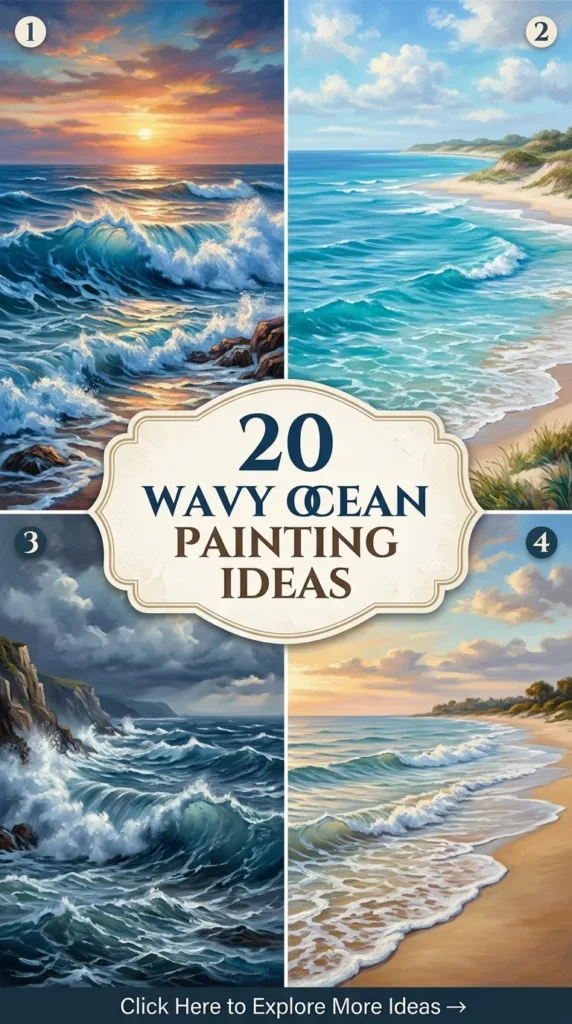
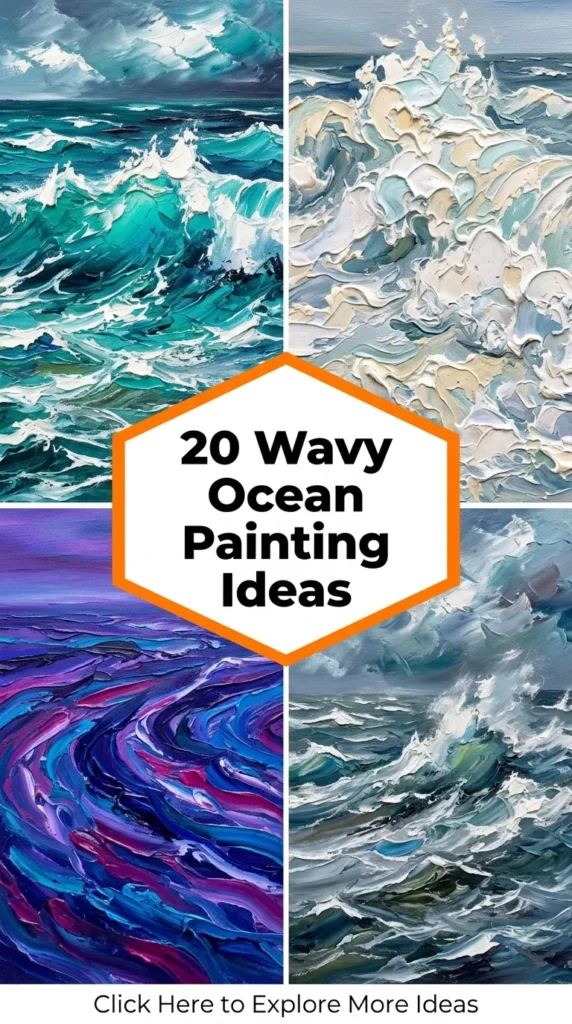
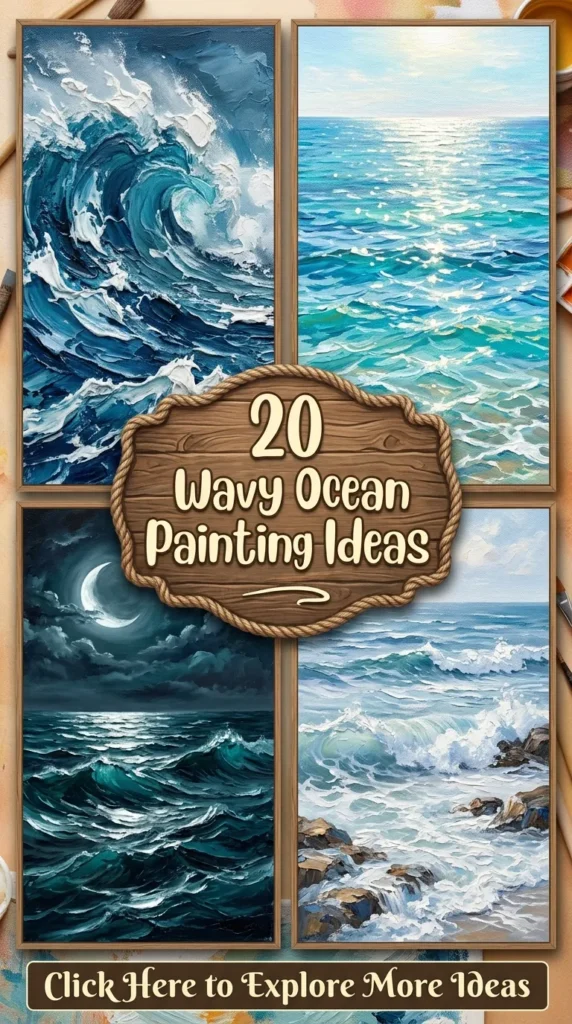
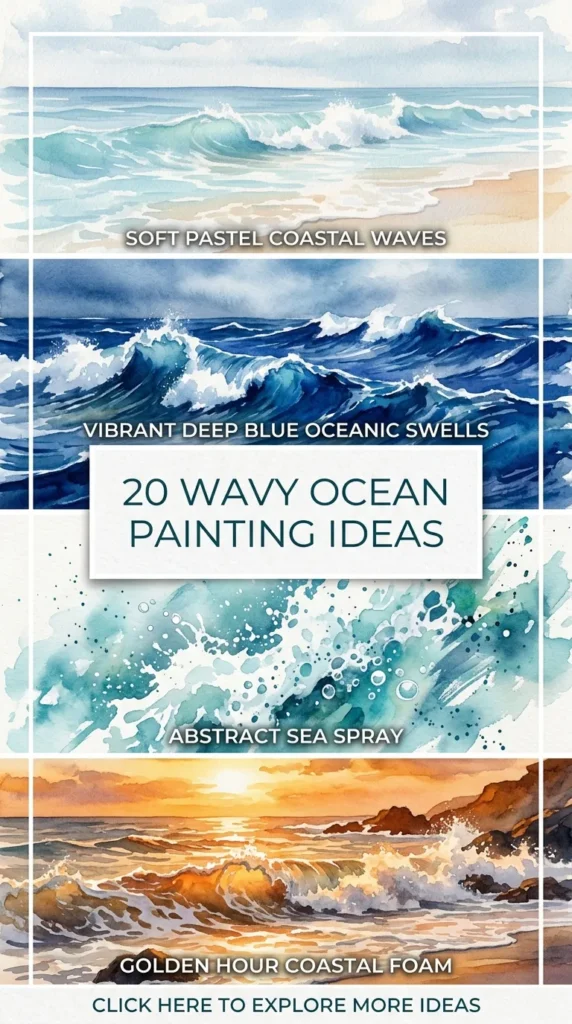
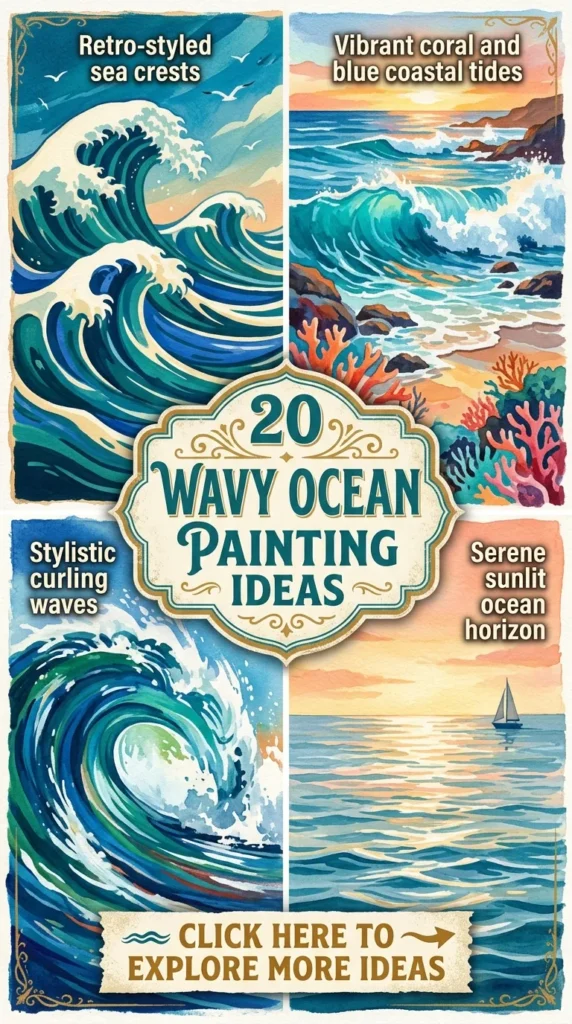
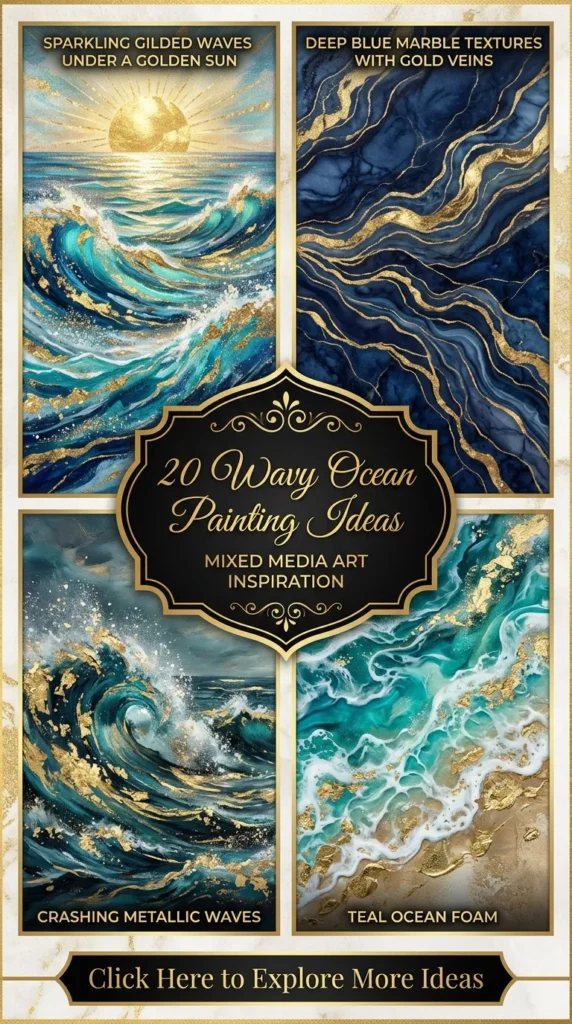
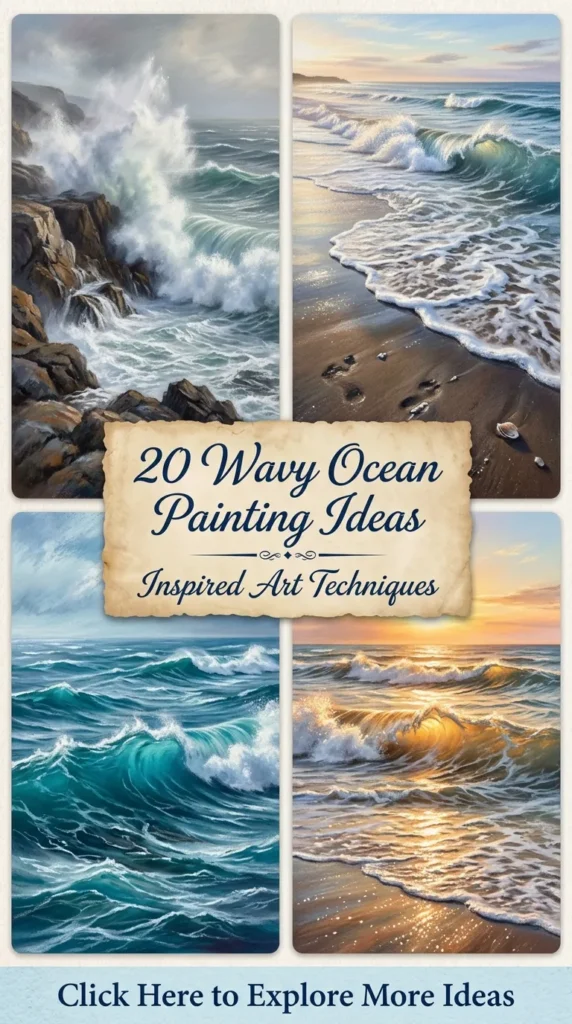
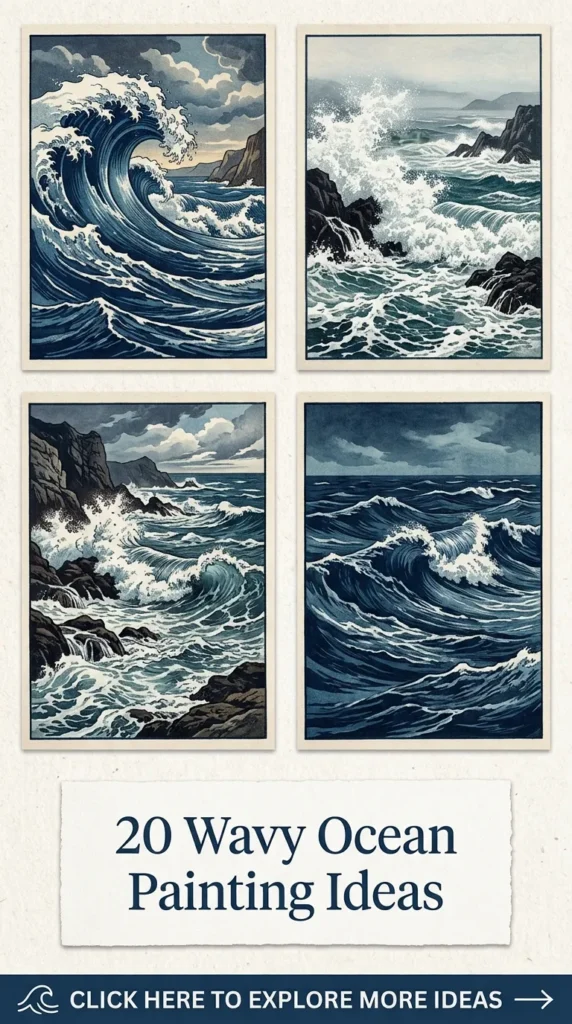
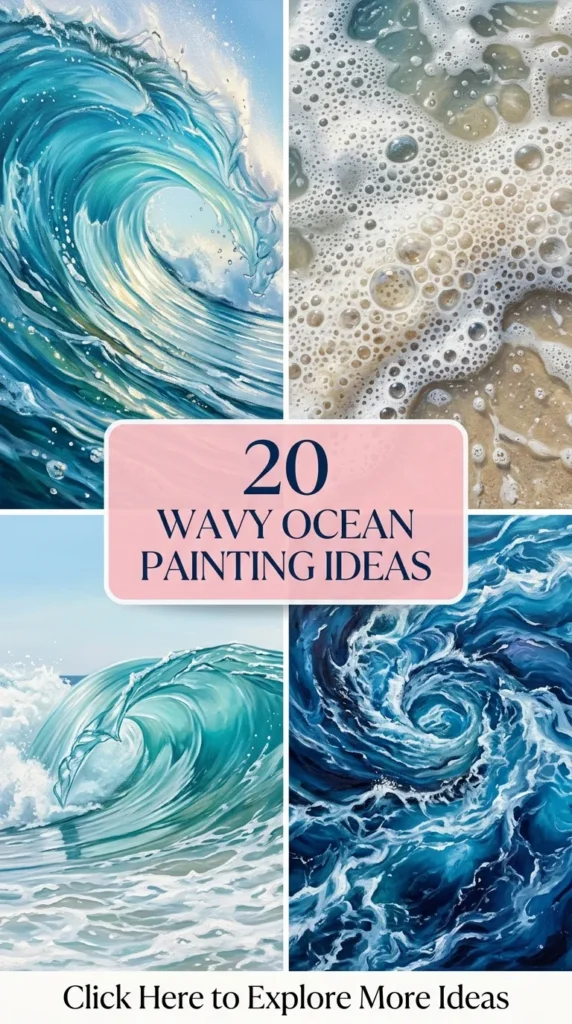
The ocean is a masterclass in duality. In one moment, it offers serene, rhythmic tranquility; in the next, it reveals a dramatic, abyssal depth that is equal parts terrifying and captivating. Combining the moody, poetic atmosphere of Gothic aesthetics with the fluid, sweeping motion of wavy ocean seascape art creates a uniquely spellbinding visually rich genre.
Gothic style isn’t merely about darkness—it is about history, romance, high contrast, dramatic lighting, and deep, emotive visual storytelling. When applied to ocean paintings, this style trades pastel sunsets and tropical turquoise for dramatic storm surges, deep velvet blues, obsidian waves, glowing bioluminescence, antique gold-trimmed coastlines, and moonlit horizon lines.
Whether you are an oil painter, digital artist, or acrylic enthusiast looking to curate a moody studio space, this comprehensive guide explores 20 Elegant Gothic-Style Aesthetic Wavy Ocean Painting Ideas. Each idea includes an breakdown of the concept, step-by-step creation guidance, and tips for stylistic variation to help you create captivating masterpieces perfect for display or online sharing.
1. Midnight Obsidian Waves with Aged Gold Leaf
What This Idea Means
This concept focuses on dramatic, sculpted ocean waves depicted in ultra-dark obsidian black and charcoal grey tones, contrasted sharply against raw, textured 24k gold leaf along the crests. It evokes an ancient, opulent, yet mysterious atmosphere.
How to Make It
- Base Layer: Coat the canvas in a rich mix of Payne’s grey and Lamp Black. Block out sweeping wave formations using heavy body acrylics or oils.
- Sculpting Movement: Use a palette knife to build high-relief texture on the crests of the waves, keeping the troughs smooth and dark.
- Gilding: Once the paint dries completely, apply acrylic gilding size to the tips of the waves where foam would naturally settle. Carefully lay down gold leaf, buffing away the excess with a soft brush to leave delicate, shimmering metallic accents.
Tips and Variations
- Tip: Seal the gold leaf with a gloss varnish to keep it from tarnishing while leaving the dark background matte for contrast.
- Variation: Replace gold leaf with antique silver or burnished copper to shift the tone toward a colder, moonlight aesthetic.
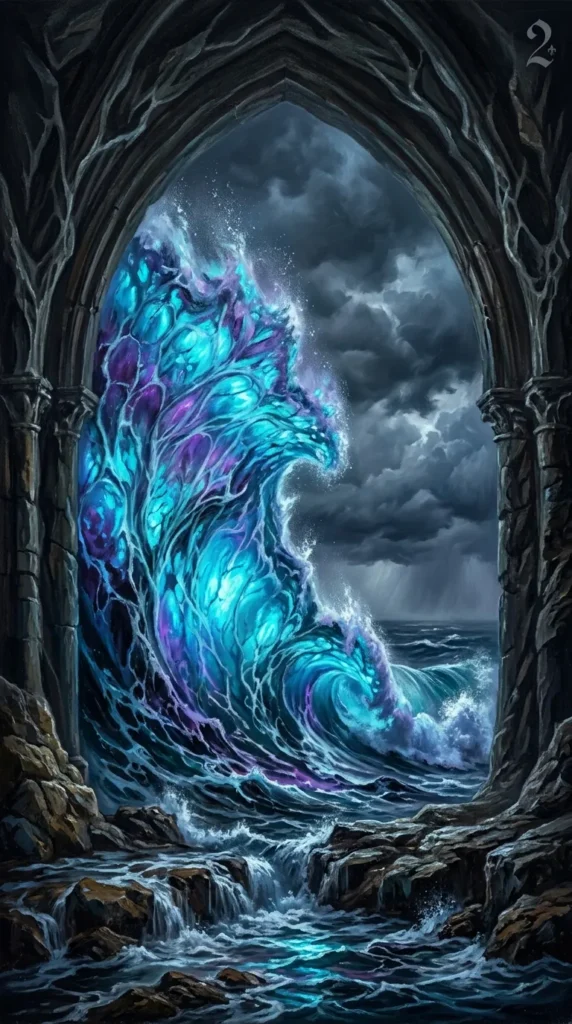
2. Cathedral Glass Bioluminescent Surge
What This Idea Means
Inspired by gothic cathedral stained-glass windows, this piece visualizes sweeping ocean waves glowing with dark cyan and violet bioluminescence from within, framed by towering, arch-like rock formations.
How to Make It
- Framing: Draft sweeping, pointed Gothic arch silhouettes along the borders using dark umber and black.
- Lighting: Paint the center of the ocean wave using vibrant glazes of Phthalo Green, Cobalt Teal, and Dioxazine Purple over a pure white underpainting.
- Details: Paint fine, vein-like dark water lines across the glowing areas to mimic the lead cames of stained glass.
Tips and Variations
- Tip: Use fluid acrylics or thinned oil glazes in layers to create an illusion of internal light emission.
- Variation: Add intricate sea-sea fog rising in pointed arch shapes along the horizon.
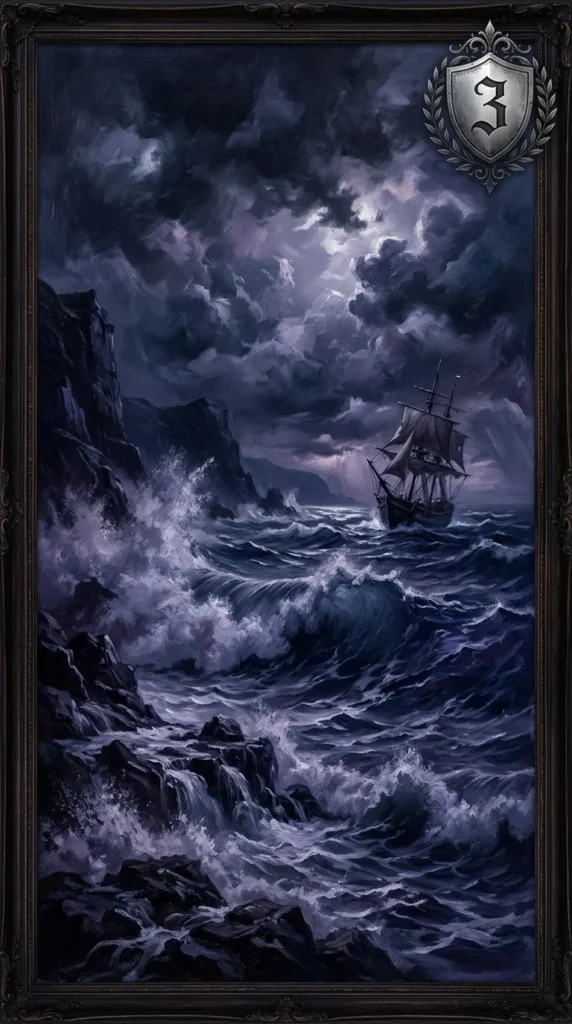
3. Victorian Velvet Indigo Ocean Storm
What This Idea Means
This idea captures a tempestuous ocean rendered in deep indigo, Prussian blue, and rich violet tones reminiscent of heavy Victorian velvet drapes. The waves feature high, dramatic peaks caught in an eternal storm.
How to Make It
- Palette: Mix deep Prussian Blue with touches of Alizarin Crimson to achieve a royal indigo depth.
- Execution: Blend the dark base with a large wash brush, then construct towering wave forms using sweeping diagonal brushstrokes. Highlight the foam using a dry brush technique with muted lavender and ash grey.
Tips and Variations
- Tip: Avoid pure white for sea foam; soft lavender-grey gives a richer, vintage Victorian aesthetic.
- Variation: Paint a faint, distant Victorian lighthouse battling the storm on the far corner of the horizon.
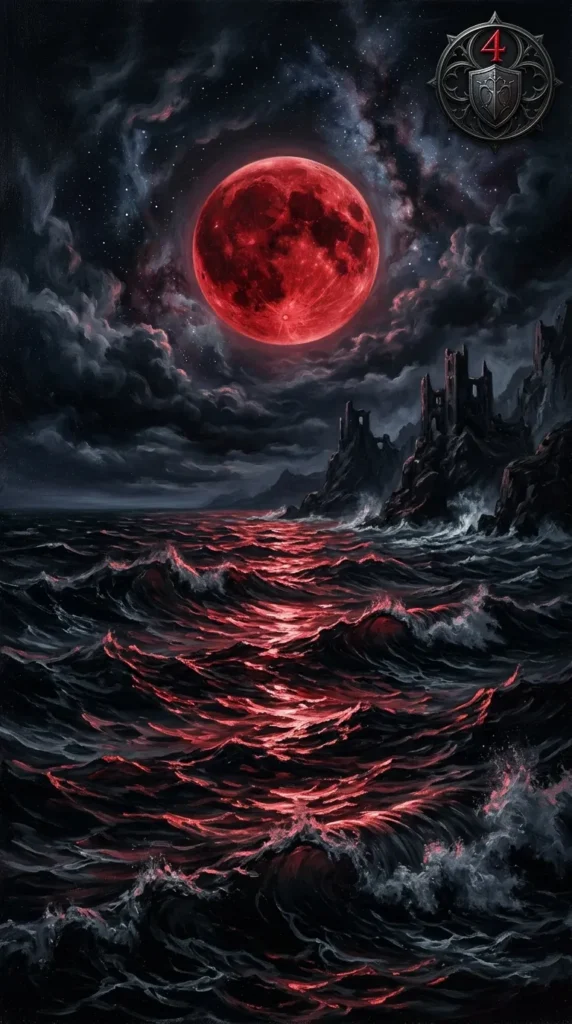
4. Lunar Eclipse Crimson Tide
What This Idea Means
A dramatic nocturnal painting featuring a blood-red lunar eclipse hanging over a dark, turbulent sea. The waves reflect deep crimson and deep violet undertones, creating an ethereal, cosmic gothic ambiance.
How to Make It
- Sky Setup: Paint a deep black sky featuring a glowing crimson moon framed by soft atmospheric smoke.
- Reflections: Paint long, vertical crest reflections down the center of the wave field using Cadmium Red Deep mixed with Burnt Sienna.
- Waves: Keep the wave structures sharp and angular, showing strong contrast between pitch-black shadow troughs and deep red highlights.
Tips and Variations
- Tip: Blend crimson glazes thinly over existing dark waves to make the light look reflected rather than painted on top.
- Variation: Introduce a phantom sailing vessel in silhouette beneath the eclipse.
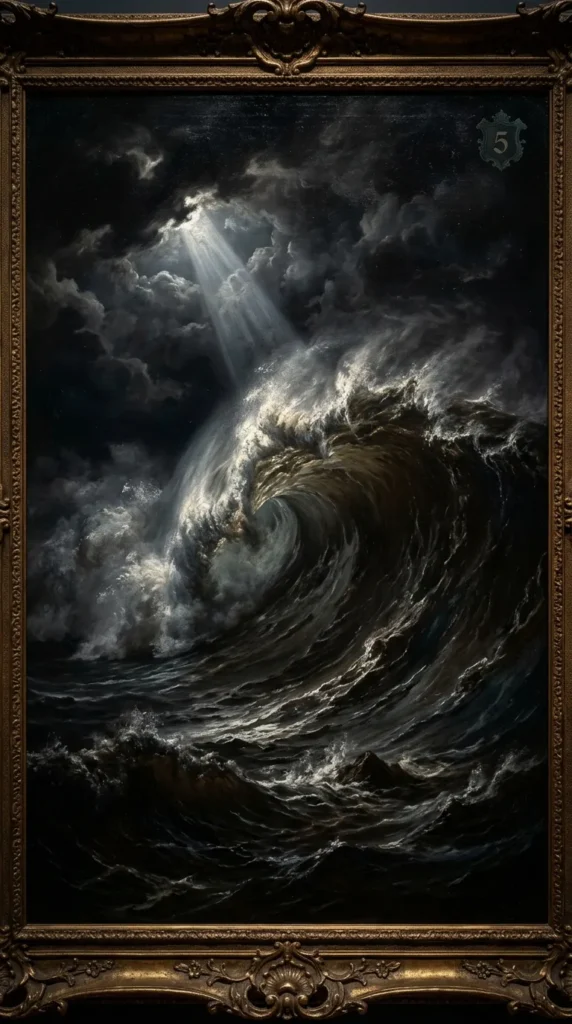
5. Baroque Chiaroscuro Tempest
What This Idea Means
Leveraging the dramatic lighting techniques of 17th-century Baroque masters, this piece features a singular, massive ocean wave illuminated by a harsh, directional shaft of moonlight breaking through dark storm clouds.
How to Make It
- Lighting Direction: Choose a single light source angle (e.g., top-left).
- Underpainting: Paint the entire canvas black. Use white gesso or paint to build up the lit parts of the wave (impaasto style), leaving the shadow areas completely dark.
- Glazing: Apply subtle glazes of Raw Umber and Prussian Blue over the light areas to give an old-world oil finish.
Tips and Variations
- Tip: Keep the shadow areas virtually featureless to maximize the dramatic chiaroscuro contrast.
- Variation: Incorporate swirling mist at the base of the wave lit in pale cream tones.
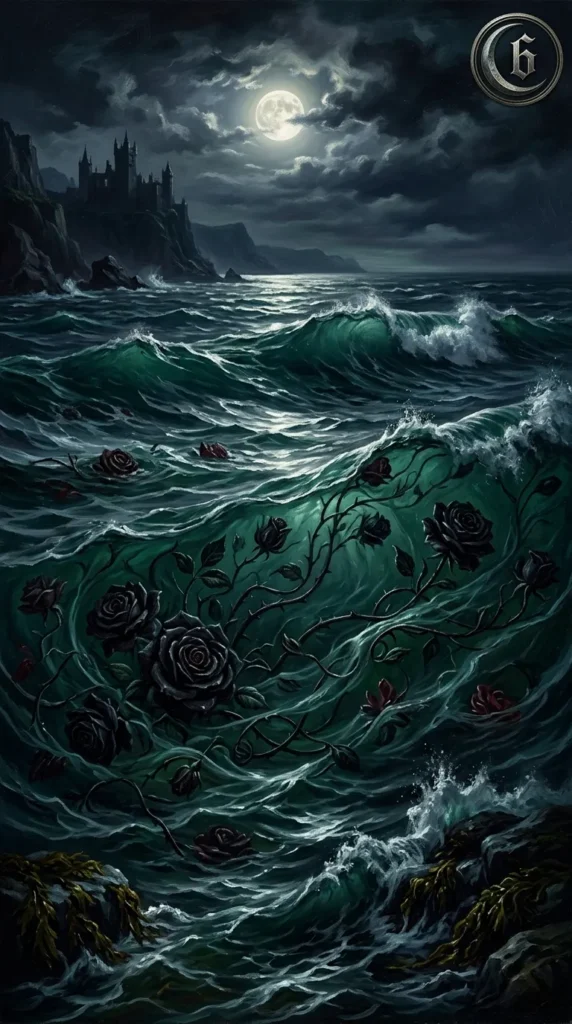
6. The Siren’s Midnight Garden
What This Idea Means
A haunting ocean composition where gentle yet tall, rolling waves mix with submerged dark flora, kelp tendrils, and floating dark roses beneath a moonlit surface.
How to Make It
- Foreground/Midground: Paint fluid, curving waves with transparent layers of deep emerald and slate blue.
- Flora: Paint delicate, shadowy vines, black roses, and gothic botanical motifs floating seamlessly within the translucent crest of the main wave.
- Finishing: Highlights on the water surface should look like wet silk, achieved with fine fan-brush strokes.
Tips and Variations
- Tip: Work wet-on-wet for the submerged flowers to give them a soft, aquatic blur.
- Variation: Add floating iridescent pearls amongst the foam spray.
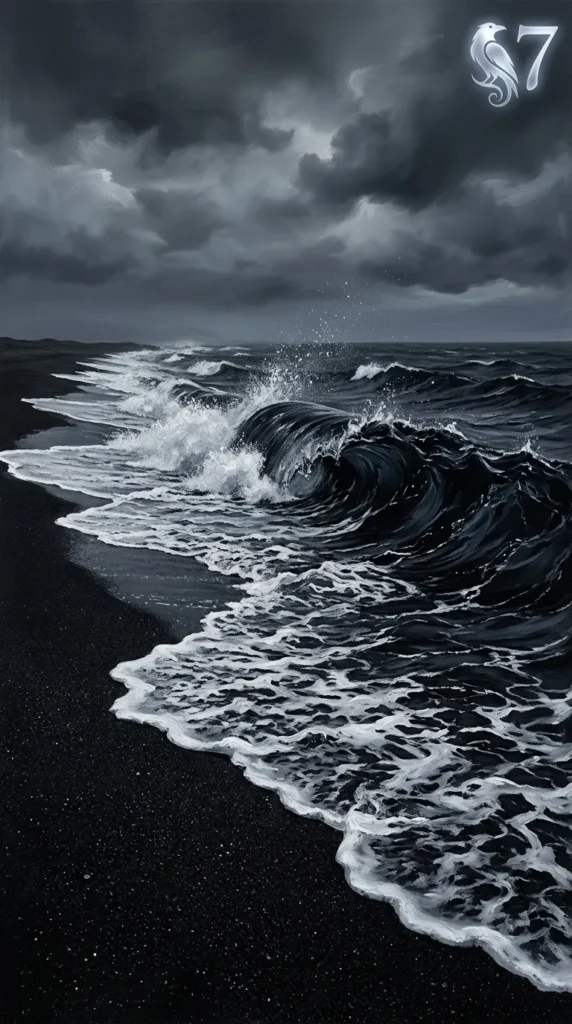
7. Shadow Coast Black Sand Breakers
What This Idea Means
Focuses on coastal shore dynamics where heavy, obsidian ocean waves crash onto fine, glittering black volcanic sand under an overcast, moody sky.
How to Make It
- Texture: Mix fine sand or pumice gel into black acrylic paint to build up a realistic, textured beach line at the bottom third of the canvas.
- Water Waves: Use smooth, gloss-finish paints to contrast the matte black sand beach. Paint rolling shoreline waves peeling back, showing white-grey froth patterns on the sand.
Tips and Variations
- Tip: Use a fan brush with dry ash-white paint to lightly stipple the foam trailing back into the sea.
- Variation: Add scattered obsidian crystals or dark drift rocks along the shoreline.
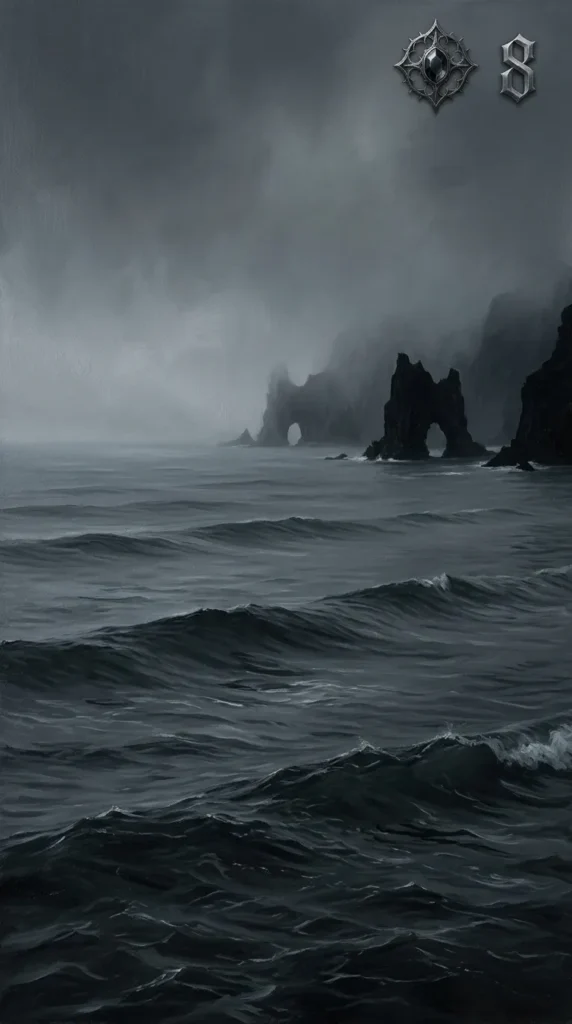
8. Gothic Arch Misty Ocean Horizon
What This Idea Means
An minimalist, deeply atmospheric painting featuring calm yet heavy rolling sea swells disappearing into a thick wall of dark sea fog, framed naturally by distant black sea arches.
How to Make It
- Gradient: Create a seamless vertical gradient from deep charcoal at the bottom to misty pearl-grey at the top.
- Sells: Paint low, sweeping, wide waves using horizontal palette knife strokes with minimal froth.
- Atmosphere: Dab thinned grey glaze with a sea sponge across the midground to simulate dense sea fog.
Tips and Variations
- Tip: Keep the brushwork horizontal to emphasize vast, calm ocean expanse.
- Variation: Add a solitary raven perched on a sea stack in the foreground.
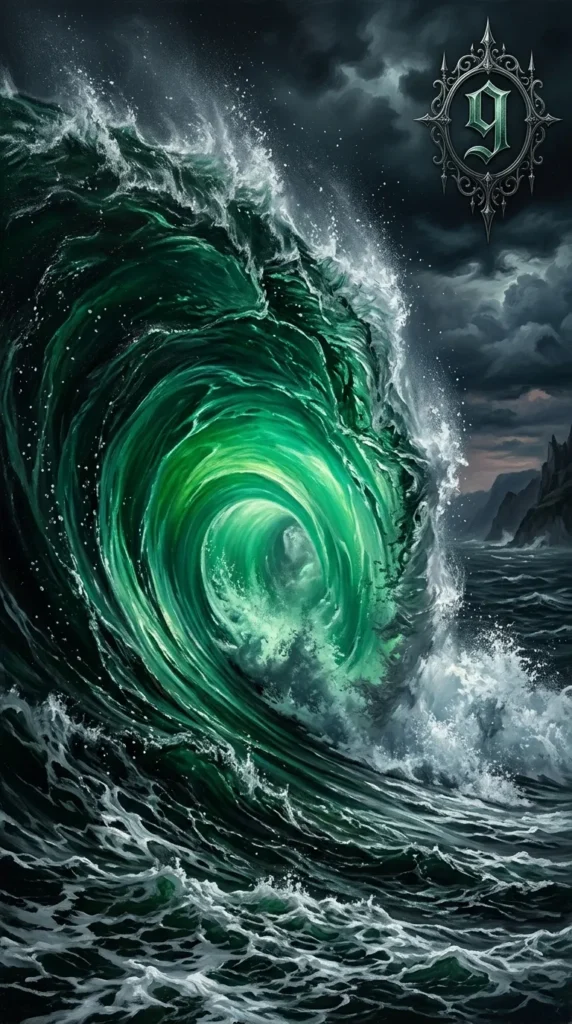
9. Cimmerian Emerald Abyss
What This Idea Means
Deep, dark Cimmerian green ocean waves rising into towering curling barrels. The focal point is the eerie, translucent light catching the inside curl of the emerald water.
How to Make It
- Color Palette: Viridian, Deep Phthalo Green, Charcoal, and Zinc White.
- The Barrel: Paint the main wave barrel using a saturated Viridian green glaze over a bright white base.
- Details: Paint outer shadow edges in pitch black to make the internal green glow stand out.
Tips and Variations
- Tip: Use gloss gel mediums on the glowing wave interior to give a glass-like depth.
- Variation: Blend faint violet glazes into the deep shadows beneath the wave.
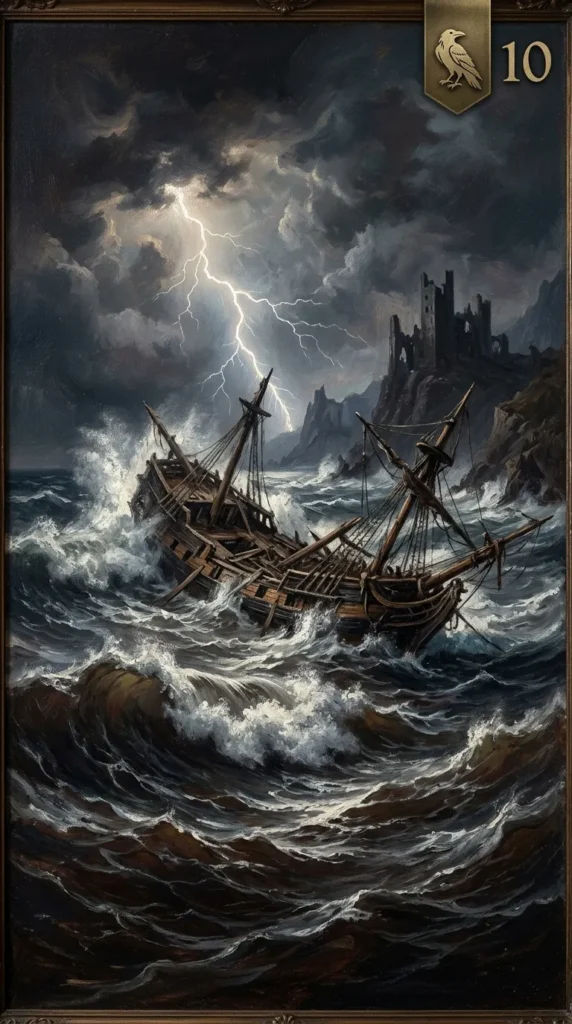
10. The Wreckage of Antiquity
What This Idea Means
A romantic gothic seascape portraying splintered, ancient wooden ship ruins being tossed in violent, towering ocean waves under a lightning-lit night sky.
How to Make It
- Composition: Position the towering wave on one side, leaning aggressively over the wooden wreckage.
- Details: Detail the wooden beams using dark umbers, adding carved gothic embellishments on the ship’s remains.
- Action: Paint high-speed spray using toothbrush splattering techniques with grey-white paint.
Tips and Variations
- Tip: Use stark white fine lines for distant lightning bolts to instantly set the moody tone.
- Variation: Paint subtle, ghost-like luminescence trailing from the wreckage underwater.
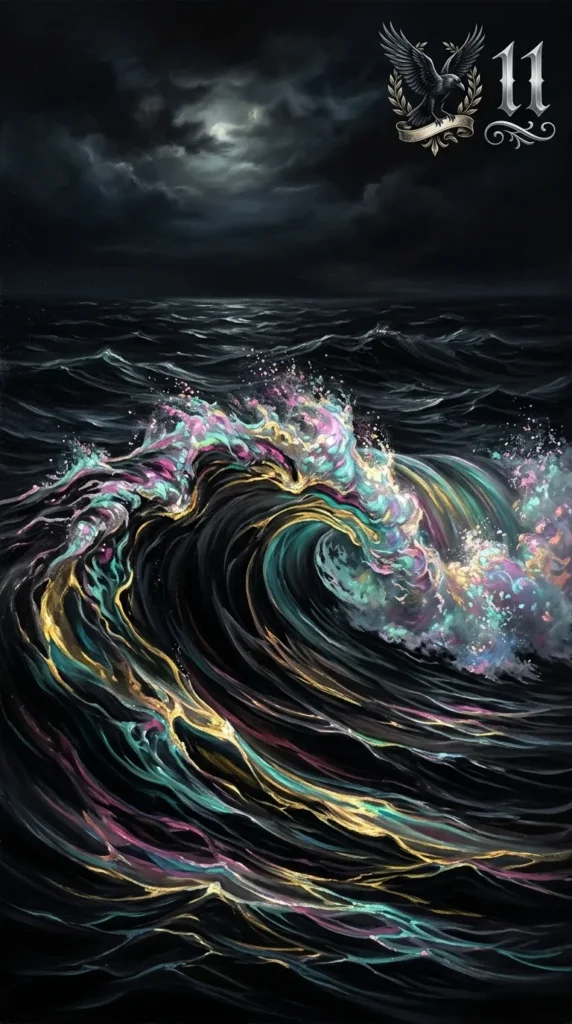
11. Opalescent Pearl & Raven Foam
What This Idea Means
A unique color study contrasting raven-black wave bodies with opulent, iridescent, rainbow-sheen foam crests inspired by mother-of-pearl and beetle wings.
How to Make It
- Waves: Smooth, glossy black and dark charcoal wave curves.
- Foam Texture: Mix iridescent palette paints (magenta, teal, and gold shifting pigments) into white foam paint.
- Application: Dab the shimmering foam along the wave edge using a stiff bristled filbert brush.
Tips and Variations
- Tip: Apply iridescent paints over dark surfaces for maximum color-shifting effect.
- Variation: Frame the painting with a painted vintage lace border.
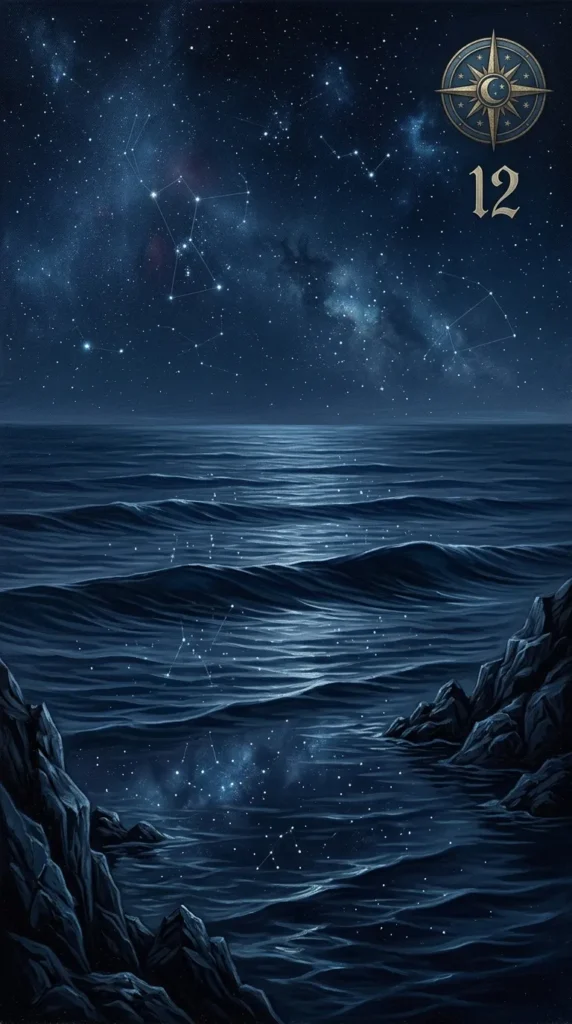
12. Celestial Constellation Sea Swells
What This Idea Means
A poetic crossover between astronomy and marine art, featuring dark, gentle ocean swells that mirror the exact star constellations of the night sky upon their glassy surface.
How to Make It
- Background: Smooth, deep navy-black ocean water with gentle, cresting waves.
- Constellations: Use a fine detail liner brush with pale glowing blue paint to connect tiny star points across the wave peaks in constellation patterns.
Tips and Variations
- Tip: Keep wave movement minimal so the constellation lines remain legible across the canvas.
- Variation: Paint the moon glowing softly underwater instead of in the sky.
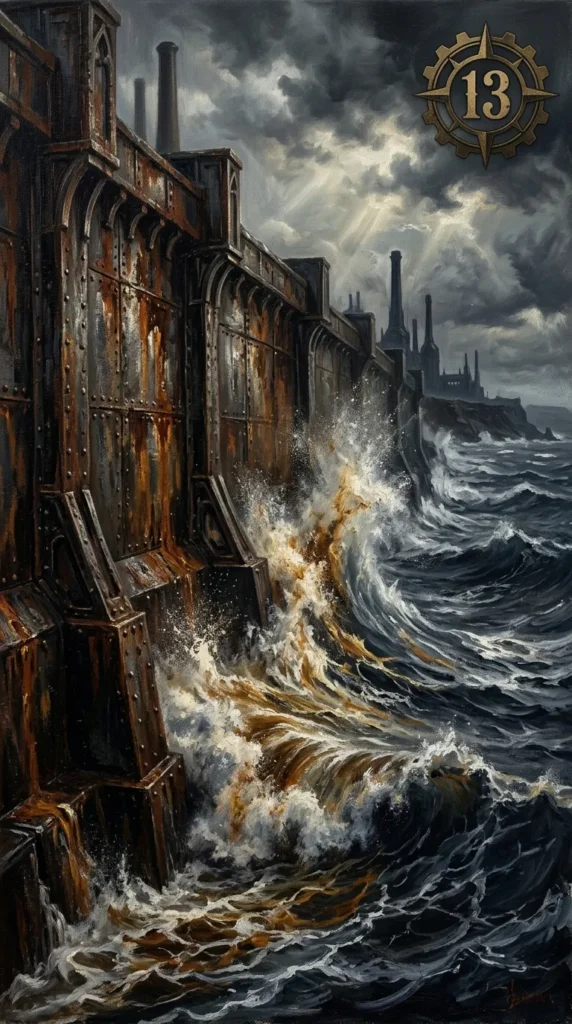
13. Iron and Rust Sea Wall Splatters
What This Idea Means
Industrial Gothic inspiration featuring violent ocean waves crashing against an ancient, rusted iron sea wall, creating dramatic spray and rust-streaked foam.
How to Make It
- Structure: Paint a heavy vertical sea wall using burnt umber, orange rust glazes, and dark iron tones.
- Wave Collision: Paint a powerful wave impacting the wall. Use a stiff toothbrush or spatter brush to fling white and rust-tinted paint upward in a sharp spray pattern.
Tips and Variations
- Tip: Use real iron powder or coarse texture paste on the wall section for authentic tactile contrast.
- Variation: Add gothic iron lanterns hanging from the wall, flickering in the storm.
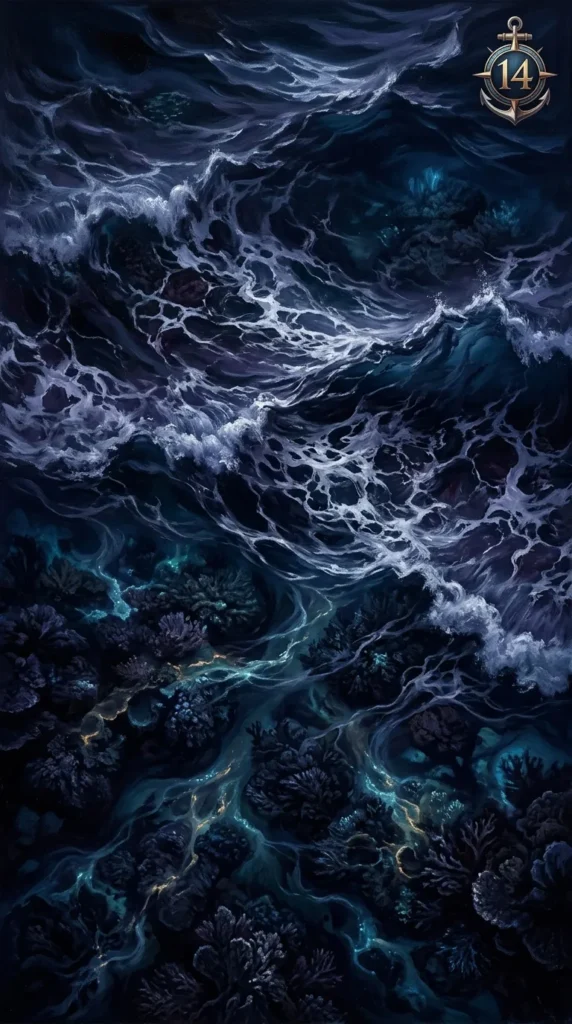
14. Midnight Coral Reef Shadows
What This Idea Means
An overhead aerial perspective looking down at moody ocean waves passing over deep, shadow-draped dark coral structures beneath the surface.
How to Make It
- Perspective: Overhead flat lay perspective.
- Under-Layer: Paint faint, dark violet and black coral patterns on the canvas floor.
- Over-Layer: Paint semi-transparent wave swells gliding across in deep marine blues and teals, veiling the coral below.
Tips and Variations
- Tip: Soften underwater edges while keeping surface foam crisp to establish depth.
- Variation: Add subtle bioluminescent stingrays gliding beneath the dark water.
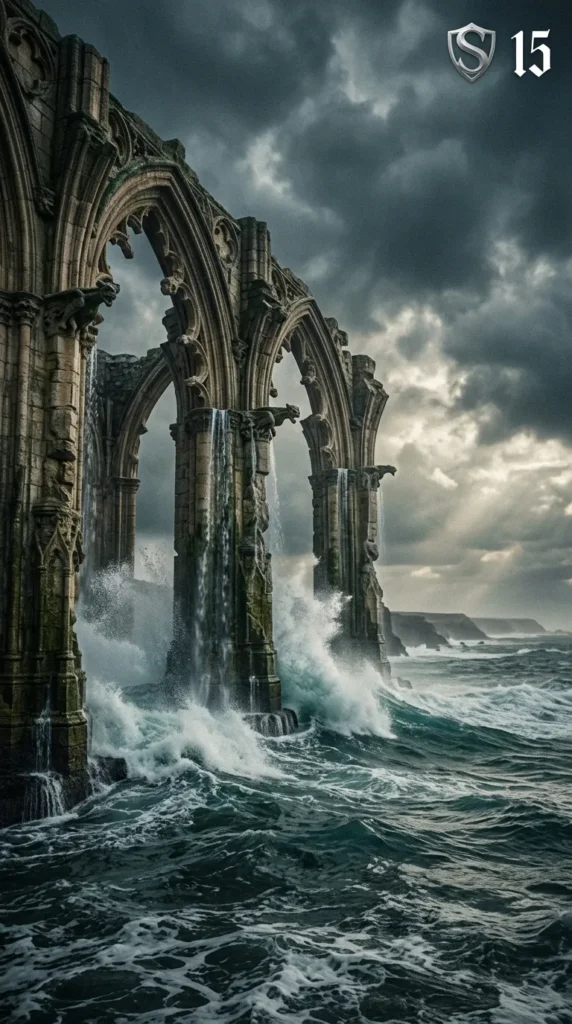
15. The Haunting of Neptune’s Gates
What This Idea Means
A surreal, architecture-infused painting showing massive, crumbling gothic gateway pillars emerging directly out of turbulent, cresting ocean waves.
How to Make It
- Architecture: Use precise ruler guidelines to draw towering gothic pillars and pointed arches standing in the middle of the sea.
- Water Integration: Paint foam wrapping violently around the base of the pillars, with water cascading down the ancient carved stone.
Tips and Variations
- Tip: Paint creeping black barnacles and moss on the base of the pillars to anchor them realistically in the water.
- Variation: Place a single glowing antique lantern atop one of the archways.
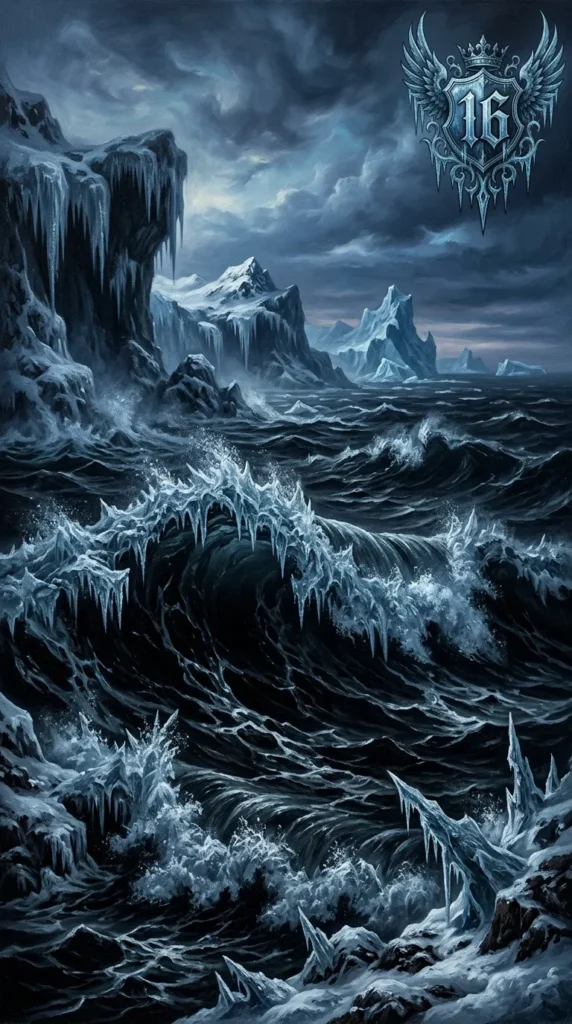
16. Frost and Obsidian Arctic Waves
What This Idea Means
A freezing, dark arctic aesthetic showing obsidian ocean water forming jagged, ice-encrusted wave crests under a pale twilight sky.
How to Make It
- Color Palette: Cold blues, slate greys, crisp whites, and obsidian black.
- Ice Details: Apply heavy impasto white gel along the wave peaks, then score it with a detail tool to create sharp, icicle-like edges.
Tips and Variations
- Tip: Keep the sky cool-toned with minimal warm colors to emphasize coldness.
- Variation: Add floating dark icebergs in the distant background.
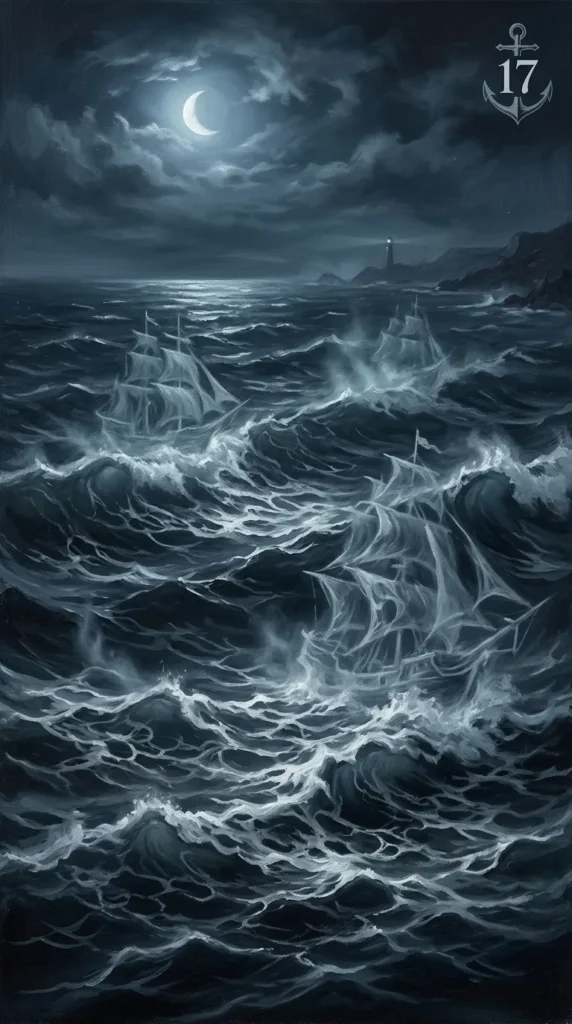
17. Phantom Ship Ghost Foam Waves
What This Idea Means
A eerie atmospheric seascape where the white sea foam generated by the rolling ocean waves forms ethereal, phantom-like shapes of classic vintage ships and faces.
How to Make It
- Sea Surface: Paint sweeping, dark midnight blue waves.
- Foam Shaping: As you paint the foam patterns across the wave faces, subtly shape the white lines to form phantom ship sails and fluid organic silhouettes.
Tips and Variations
- Tip: Keep the hidden ship shapes subtle so they reveal themselves upon close inspection.
- Variation: Use glow-in-the-dark paint mixed into the foam highlights for a night-time reveal.
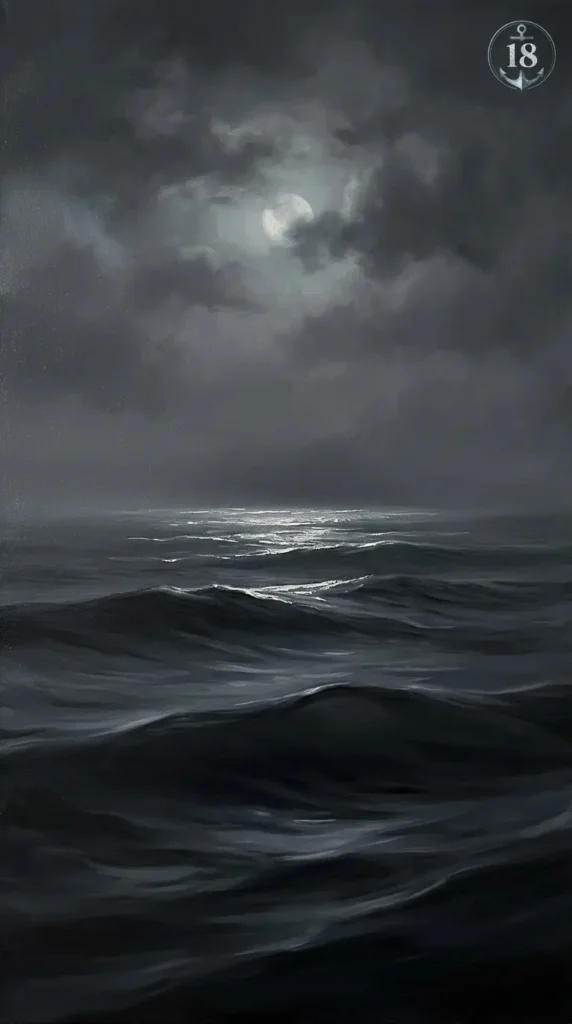
18. Velvet Fog & Silver Moonlight Reflections
What This Idea Means
Focuses on the smooth, velvety motion of gentle nocturnal ocean swells catching a sharp, brilliant line of silver moonlight across a vast horizon.
How to Make It
- Base: Create ultra-smooth wave slopes using a blend of black, charcoal, and dark slate.
- Reflection: Paint a vertical path of bright silver and white razor-thin horizontal dashes right down the center of each wave crest.
Tips and Variations
- Tip: Use a flat synthetic brush held horizontally to create clean, sharp moonlight highlights.
- Variation: Add a soft ringed moon aura in the foggy sky above.
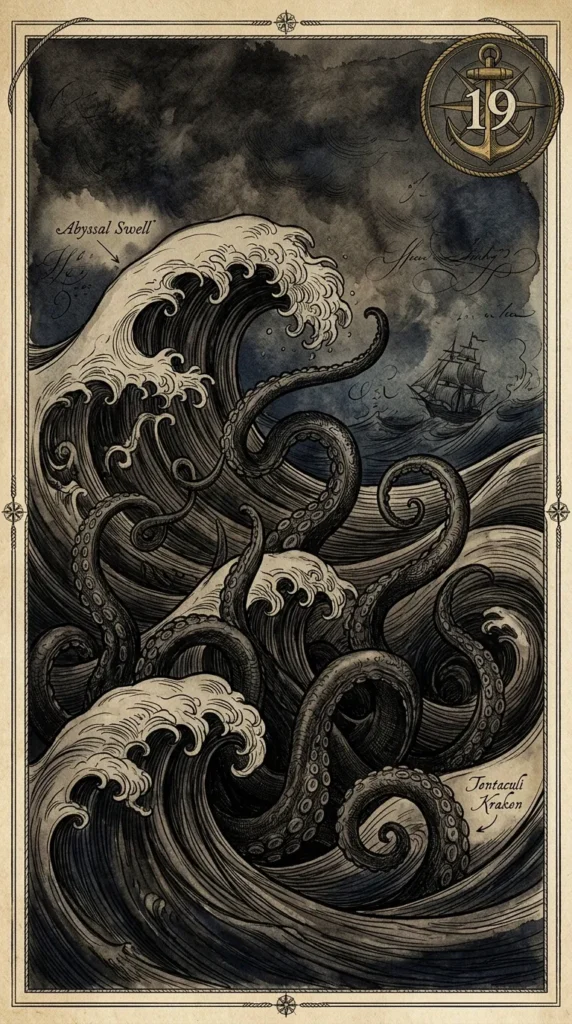
19. Victorian Botanical Kraken Swells
What This Idea Means
Blending 19th-century botanical and nautical illustrations, this style depicts powerful ocean waves entwined with mysterious, shadowy kraken tentacles reaching from the depths.
How to Make It
- Illustration Style: Use precise ink line work over acrylic washes.
- Waves & Monster: Paint dark, stylized ocean waves, blending smoothly into smooth, curling tentacles with subtle suction-cup details emerging from the wave troughs.
Tips and Variations
- Tip: Use fine black fineliner ink over dried watercolor or acrylic washes for an authentic antique book illustration feel.
- Variation: Incorporate vintage compass rose graphics in the sky area.
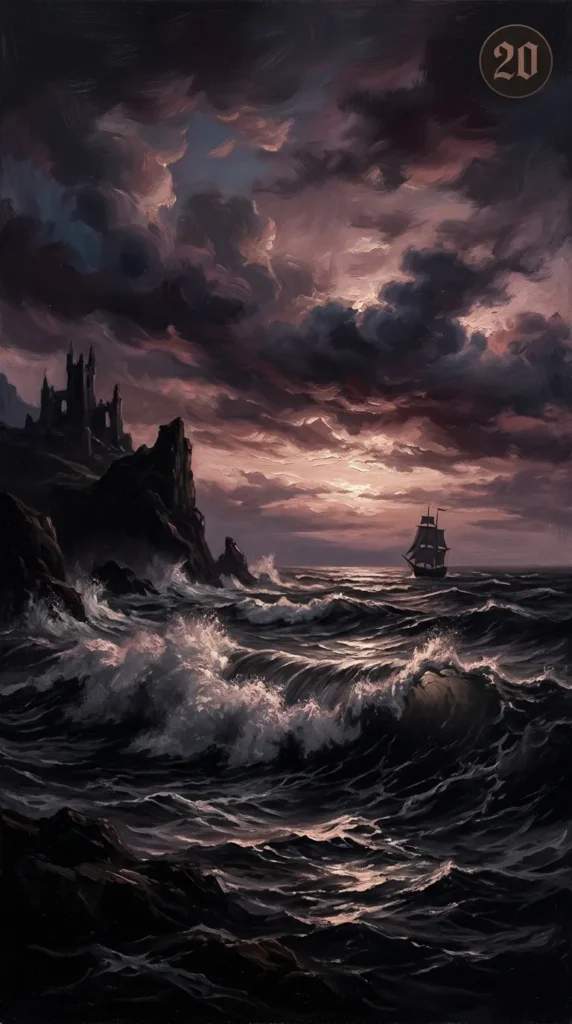
20. Gothic Rose Twilight Horizon
What This Idea Means
A dramatic sunset/twilight ocean piece featuring deep dusty rose, mauve, and plum skies reflecting over violent, ink-black ocean waves.
How to Make It
- Sky: Blend a gradient of deep plum purple down to dusty rose at the horizon line.
- Water Contrast: Paint the ocean waves in stark, pitch-black ink tones, letting only the crest edges catch delicate dusty-rose highlights.
Tips and Variations
- Tip: Keep the water heavily shadowed to prevent the pink tones from making the painting look tropical.
- Variation: Add silhouetted Victorian iron railings along the bottom edge as a viewing balcony.