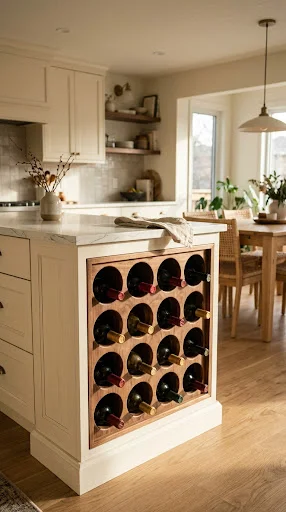
Under-Island Transverse Shelving

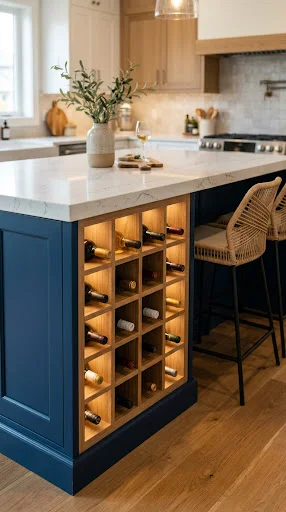
Kitchen islands are the undisputed hub of the modern home, serving as prep stations, dining tables, and social gathering points. By integrating a transverse wine rack directly into the base of your island, you transform a massive block of cabinetry into a dynamic, functional architectural feature. This design utilizes the often-underused depth of the island, allowing bottles to lie horizontally, parallel to the island’s short side. This orientation ensures that your wine corks remain constantly moist, preserving the integrity of your collection while keeping your favorite vintages within arm’s reach during dinner parties.
To achieve a seamless aesthetic, construct the wine cubbies from the same wood species as your island’s accent details, such as the barstools or overhead beams. For a striking visual contrast, paint the exterior of the island a deep charcoal or navy, while leaving the interior of the wine rack in a warm, natural white oak. This creates a beautiful depth of field, making the bottles appear as if they are floating within the island itself. It is a highly practical solution that saves precious wall space while adding undeniable luxury to your kitchen layout.
The Vertical Slide-Out Pantry Rack
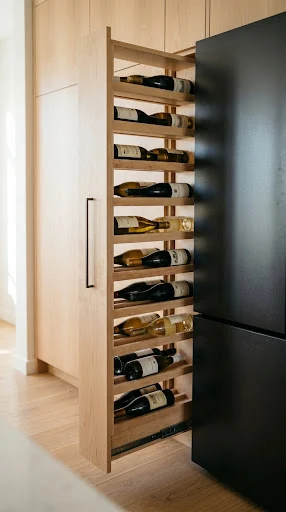
In compact kitchens where every square inch of wall and floor space is at a premium, the vertical slide-out wine rack is a masterclass in space optimization. Borrowing engineering concepts from the classic pull-out spice rack, this slender cabinet slides out on heavy-duty, soft-close drawer glides. Inside, a custom-milled wooden or metal framework cradles bottles securely in a staggered vertical configuration. This prevents them from rolling or clinking together when the pantry is opened and closed.
This built-in idea is perfect for those awkward, narrow gaps that often occur at the end of a cabinet run, such as the six-inch space next to a refrigerator or oven stack. When closed, the rack masquerades as a standard cabinet filler panel, maintaining a clean, minimalist kitchen facade. When pulled open, it reveals a hidden, organized cellar that can hold up to two dozen bottles of wine. It is a clever, high-tech solution that prioritizes clean lines and hidden functionality.
Arched Dry Bar Niche
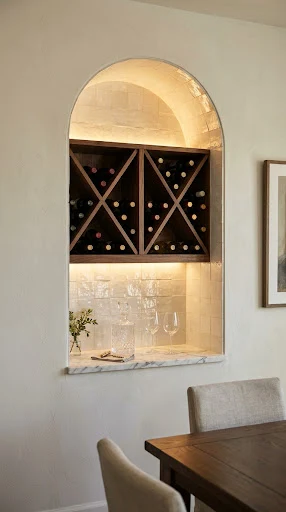
Architectural curves have made a massive comeback in interior design, offering a soft, organic counterpoint to the sharp angles commonly found in modern homes. An arched dry bar niche carved directly into a dining room or living room wall creates an instant focal point that feels both historic and contemporary. By lining the interior of this arched recess with custom-built, diamond-cross wine bins, you create a dedicated beverage station that exudes European elegance.
To maximize the visual impact of the arch, consider tiling the back wall of the niche with zellige tiles, which catch the light beautifully and add texture. Install a small, integrated LED strip along the inner curve of the arch to cast a warm, downward glow over your wine collection. The lower portion of the niche can feature a small marble countertop for pouring drinks, with deep drawer storage below for corkscrews, decanters, and glassware, making it a fully self-contained entertainment hub.
Over-the-Fridge Diamond Crate
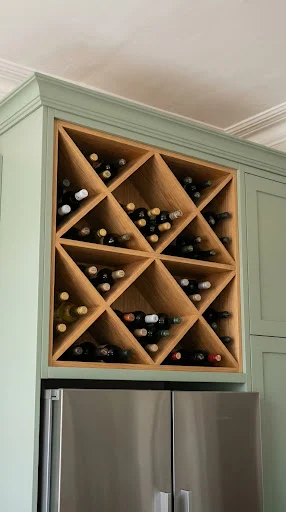
The space above a refrigerator is notoriously difficult to utilize effectively. It is often too deep and too high for standard cabinet storage, leading to forgotten items gathering dust at the back of the cupboard. Replacing this awkward cabinet with a custom-built diamond crate wine rack is an ingenious way to turn a design challenge into a beautiful, functional feature. The classic diamond grid pattern is not only visually appealing but also incredibly efficient, allowing you to stack multiple bottles of different sizes within each triangular compartment.
Because the area above a refrigerator can sometimes experience slight temperature fluctuations, this location is best suited for everyday drinking wines rather than delicate, long-term aging vintages. To ensure the wine remains at a stable temperature, ensure there is adequate ventilation built around the refrigerator unit itself. Visually, the diamond pattern breaks up the monotony of standard rectangular cabinetry, adding geometric interest and a touch of rustic charm to the upper perimeter of your kitchen.
Floating Acrylic and Brass Wall Display
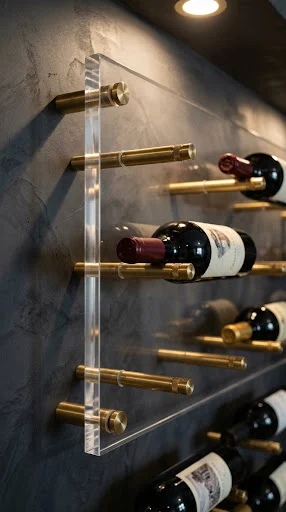
For the ultra-modern minimalist, traditional wooden wine racks can sometimes feel too heavy or rustic. A floating acrylic and brass wine display offers a sleek, gallery-like alternative that treats your wine bottles as individual pieces of art. This system utilizes thick, crystal-clear acrylic panels mounted perpendicular to the wall, held in place by solid brass hardware. The bottles rest horizontally on slender brass pegs, appearing to float mid-air against the wall.
This design is particularly effective when installed against a dramatic backdrop, such as a dark accent wall, textured plaster, or book-matched marble slabs. The transparent nature of the acrylic allows the beauty of the wall finish to shine through, while the brass details add a touch of mid-century warmth and luxury. This style of wine rack is highly customizable, allowing you to scale the installation from a small, intimate kitchen corner to a dramatic, floor-to-ceiling display in a formal dining room.
The Under-Stair Glass Cellar
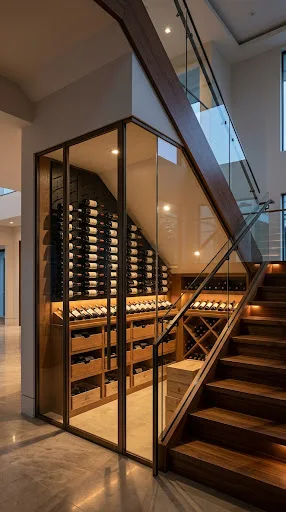
The awkward, triangular space beneath a staircase is one of the most underutilized areas in any home. Transforming this dead space into a custom, glass-enclosed wine cellar is a high-impact renovation project that adds immense value and visual drama to your home. By sealing the area with custom glass walls and a matching glass door, you create a climate-controlled micro-environment that is perfect for preserving high-end wine collections.
Inside the glass enclosure, you can mix and match storage styles, combining horizontal metal peg systems for a floating look with traditional oak bins for bulk storage. Soft, low-voltage LED lighting is essential here; it illuminates the bottles and casts beautiful shadows through the glass, turning your staircase into a spectacular architectural feature. This solution is perfect for serious collectors who want to showcase their passion in a highly visible, central location of the home.
Integrated Kitchen Peninsula End-Cap
A kitchen peninsula is a fantastic layout feature, but its outer end-cap is often left as a blank, uninspired drywall panel. Turning this end-cap into a built-in wine rack is a brilliant way to maximize storage and add a layer of custom craftsmanship to your kitchen. Because the end of a peninsula faces outward toward the dining or living area, this wine rack serves as a visual bridge between the cooking zone and the social spaces of the home.
For a sophisticated look, design the end-cap with a series of individual, circular cubbies lined with felt or smooth hardwood to protect the bottle labels. Alternatively, a grid of square cubbies painted to match the kitchen cabinetry provides a clean, cohesive look. This placement is incredibly convenient for entertaining, as guests can easily access the wine selection without entering the busy work triangle of the kitchen where cooking is taking place.
Framed Dining Room Wainscoting Rack
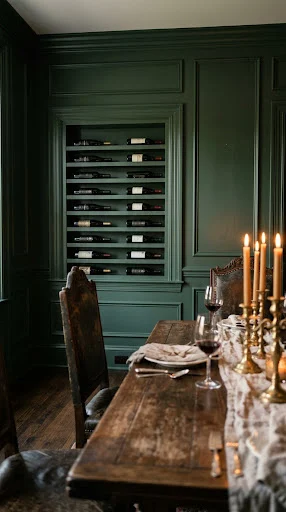
Wainscoting is a timeless architectural detail that adds texture and elegance to formal dining rooms. By integrating a recessed wine rack directly into the lower half of your dining room walls, you can elevate this traditional trim work into something truly extraordinary. This design involves carving out shallow cavities between the wall studs and lining them with custom-milled horizontal bottle cradles, all finished with the same molding profiles as the surrounding wainscoting.
When painted a single, cohesive color—such as a rich forest green, deep burgundy, or classic cream—the wine rack blends seamlessly into the wall treatment. It only reveals its true function upon closer inspection. This creates a sophisticated, library-like atmosphere in your dining room, where the wine itself becomes an integral part of the room’s architectural fabric, ready to be selected and enjoyed during long, leisurely dinner parties.
Minimalist Floating Peg Wall
If you prefer a clean, uncluttered aesthetic, the minimalist floating peg wall is the ultimate modern wine storage solution. This system relies on high-quality metal or wooden pegs that screw directly into a reinforced wall panel. The pegs are spaced precisely so that each bottle rests horizontally by its neck and base, displaying the labels clearly. This “label-forward” orientation makes it incredibly easy to catalog and select your wines at a glance.
The beauty of the peg system lies in its infinite flexibility. You can arrange the pegs in a strict, symmetrical grid for a clean, industrial look, or scatter them in a playful, organic pattern that mimics a constellation. Because the hardware is so low-profile, this style of wine rack works beautifully in tight hallways, transition spaces, or as a backdrop to a home bar, taking up virtually zero physical floor space while delivering maximum visual impact.
Corner Column Wine Tower
Kitchen corners are notorious for creating awkward, hard-to-reach cabinet spaces where items go to be forgotten. A corner column wine tower solves this layout dilemma by turning a dead corner into a striking vertical design feature. This built-in cabinet runs from the countertop all the way to the ceiling, featuring a series of stacked, angled shelves designed to hold bottles securely at a downward angle, keeping the corks wet.
By angling the shelves across the corner, you create a dynamic, three-dimensional look that softens the sharp 90-degree intersection of the walls. This vertical tower can be open-faced for easy access, or enclosed with a tall, narrow glass door to protect the bottles from dust. It is an excellent way to draw the eye upward, making your kitchen ceilings feel taller while providing a dedicated, high-capacity home for your wine collection.
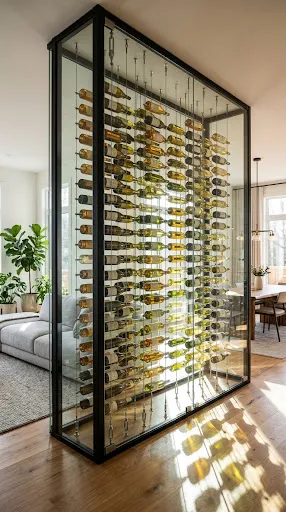
The Double-Sided Room Divider
In open-concept homes, defining separate zones without blocking light or closing off spaces can be a challenge. A double-sided, built-in wine rack serves as a functional and incredibly stylish room divider between a living room and a dining room. Constructed with a sturdy outer frame and floor-to-ceiling glass panels on both sides, this divider allows light to filter through the bottles, creating a beautiful play of color and shadow.
Inside the divider, bottles can be suspended on tension cables or minimalist metal racks, making them appear to float in mid-air. This setup is accessible from both sides, meaning you can grab a bottle of white wine from the dining side during dinner, or a bottle of red from the living room side while relaxing by the fireplace. It is a luxurious, architectural statement piece that defines the flow of your home while celebrating your love for wine.
Recessed Hallway Gallery
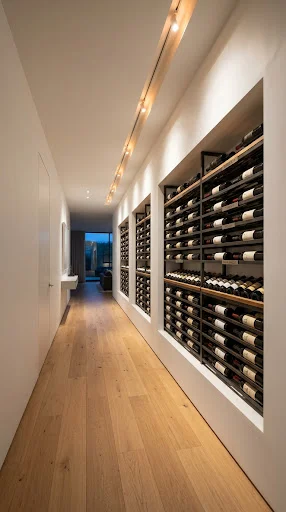
Hallways are often treated as purely transitional spaces, left blank and unadorned. However, a wide hallway can easily be transformed into a stunning wine gallery by recessing a series of shallow wine racks into the walls. By cutting into the drywall between the wall studs, you can install custom shelving units that sit flush with the wall surface, preserving the width of the hallway for foot traffic.
To make the hallway feel like a true gallery, install soft, directional track lighting along the ceiling to highlight the wine bottles. You can organize the racks by region, varietal, or vintage, turning your daily walk through the house into a visual journey through your collection. This is a brilliant way to utilize otherwise wasted wall space, turning a boring corridor into one of the most talked-about design features of your home.
Under-Bench Banquette Storage
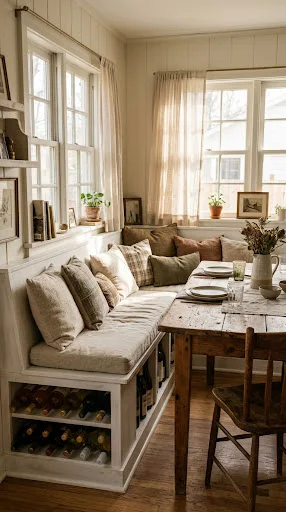
Banquette seating is a cozy, space-saving addition to any kitchen or dining nook. The base of these built-in benches is typically hollow, offering a prime opportunity for creative storage. Instead of standard pull-out drawers or lift-up tops, consider installing a series of horizontal wine cubbies along the front face of the banquette base. This keeps your wine collection tucked away neatly out of sight, yet easily accessible right at the dining table.
This design works best when the banquette base is constructed from a sturdy hardwood that matches your dining table or kitchen cabinets. Because the bottles are stored low to the ground, they are naturally kept in a cooler, darker environment, which is ideal for wine preservation. It is a highly practical, cozy design solution that maximizes every inch of seating and storage space in a compact dining area.
The Butler’s Pantry Wine Arch
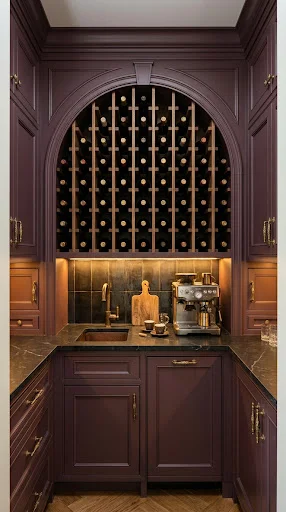
A butler’s pantry is the ultimate luxury transition space between a kitchen and a formal dining room. To elevate this space even further, design a built-in wine arch that frames the countertop area. This involves building custom arched cabinetry that curves over the main prep sink or espresso machine, with the curved upper sections dedicated entirely to individual wine cubbies.
This layout creates a beautiful sense of symmetry and drama in the butler’s pantry. Paint the cabinetry in a rich, moody hue like charcoal, plum, or deep hunter green, and use solid brass hardware to add a touch of warmth. The wine arch not only provides ample storage for dozens of bottles but also frames the workspace beautifully, making the act of preparing and pouring drinks feel like a special ritual.
Floating Timber Beam Rack
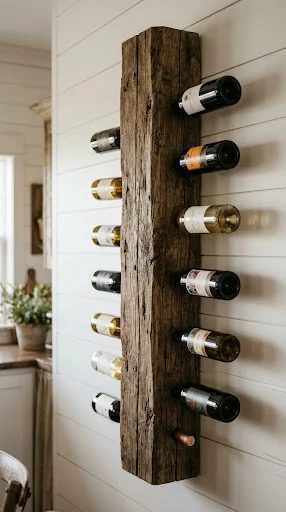
For homes with a rustic, industrial, or modern farmhouse aesthetic, a floating timber beam wine rack adds incredible warmth and organic texture. This design utilizes a massive, reclaimed wooden beam mounted securely to the wall. Deep, angled holes are precision-drilled into the face of the timber, allowing the necks of the wine bottles to be inserted horizontally, with the body of the bottle floating outward.
The contrast between the rugged, weathered texture of the reclaimed wood and the smooth, sleek glass of the wine bottles is visually arresting. Each beam is completely unique, showcasing natural knots, cracks, and grain patterns. This style of rack works beautifully as a standalone piece of functional wall art in a dining room, kitchen, or home bar, bringing a touch of the natural world indoors.
Symmetric Fireplace Flanking Racks
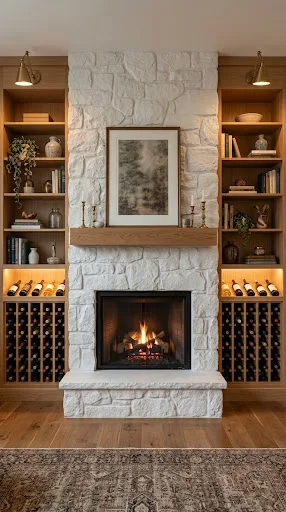
A fireplace is the natural focal point of a living room, and flanking it with custom built-ins is a classic design strategy. To make these built-ins truly unique, integrate symmetrical wine racks into the lower alcoves on either side of the hearth. This creates a balanced, harmonious look that anchors the room while adding a layer of cozy luxury.
To ensure the safety of your wine, it is crucial that the fireplace chimney is properly insulated so that heat does not transfer to the wine alcoves. Design the racks with a mix of open shelving for displaying decanters and books, and dedicated diamond bins or individual cubbies for the wine bottles. When the fire is lit, the warm glow illuminates the bottles, creating an incredibly cozy and inviting atmosphere for evening relaxation.
The Secret Door Wine Pantry
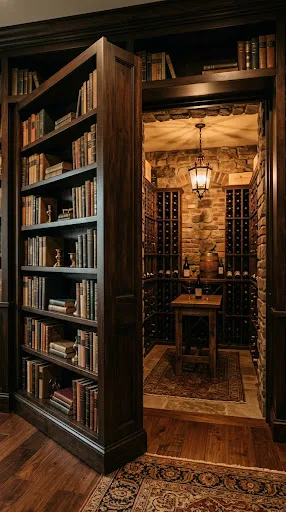
There is something undeniably magical about a hidden room or a secret door in a home. You can bring this sense of mystery and playfulness to your design by building a secret wine pantry disguised as a library bookshelf. The bookshelf itself is mounted on heavy-duty hinges and a hidden track system, allowing it to swing open smoothly with a gentle push.
Behind the bookcase lies a hidden, walk-in wine pantry, lined from floor to ceiling with custom wine racks, climate control systems, and soft lighting. This is the ultimate luxury feature for serious collectors who want to keep their rarest and most valuable vintages secure and out of sight. It adds an element of surprise and delight to your home, making wine tastings an unforgettable experience for your guests.
Minimalist Metal Grid Panel
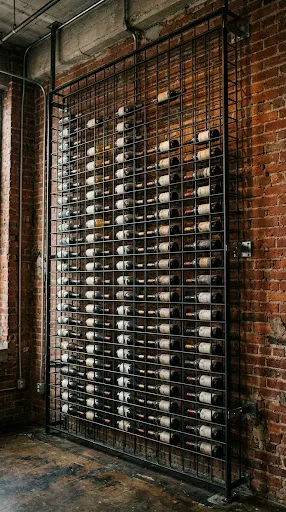
Embrace a sleek, industrial aesthetic with a built-in minimalist metal grid wine rack. This design features a floor-to-ceiling grid made from slender, matte black powder-coated steel rods. The grid is mounted slightly off the wall, creating a geometric matrix where bottles can be rested horizontally or slightly angled. The clean lines and dark metal create a striking, graphic contrast against light-colored walls.
This style of rack is incredibly durable and low-profile, making it perfect for modern lofts, urban apartments, or contemporary kitchens. Because the metal grid is so open, it allows light to flow freely, keeping the space feeling airy and spacious. Pair it with concrete floors, exposed brick, or minimalist flat-panel cabinetry to complete the sophisticated industrial look.
The Kitchen Backsplash Niche
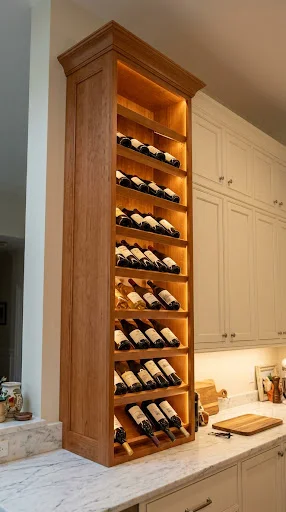
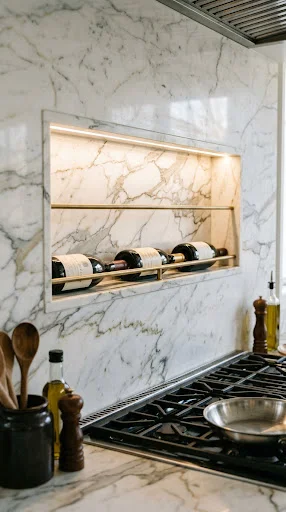
If you love cooking with wine and want to keep your bottles as close to the stove as possible, a recessed backsplash wine niche is the perfect solution. This design involves carving out a shallow, horizontal niche directly into your kitchen backsplash wall, lined with water-resistant materials like marble, quartz, or ceramic tile. Slender metal or wooden rails are installed to hold a select few bottles securely in place.
This niche keeps your cooking wines and everyday favorites organized and off the countertop, maintaining a clean, clutter-free workspace. To make the niche pop, use a contrasting tile pattern or a solid slab of dramatic marble for the back wall, and install hidden LED strip lighting under the upper lip of the niche. It is a highly functional, chef-friendly detail that adds a layer of custom luxury to your kitchen prep zone.
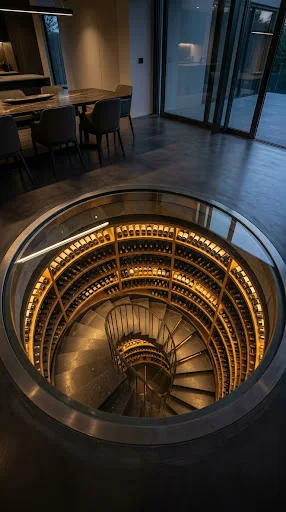
The Floating Glass Floor Cellar
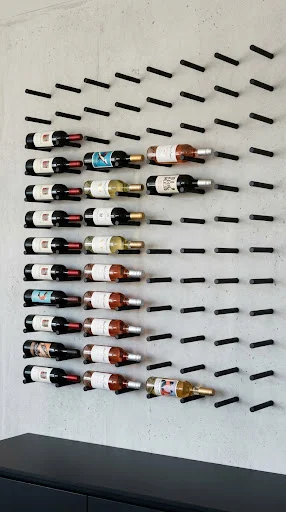
For the ultimate, show-stopping architectural statement, look no further than a subterranean wine cellar viewed through a floating glass floor panel. This jaw-dropping design is perfect for homes with a basement or crawl space directly beneath the main living or dining area. A section of the floor is replaced with structural, walk-on glass, revealing a beautifully illuminated, custom-built wine cellar below.
Guests can look down through the floor to see your entire collection arranged in spiral or linear racks, creating an incredible sense of depth and architectural drama. Access to the cellar can be gained via a hidden spiral staircase or a motorized glass trapdoor. It is a bold, high-end engineering feat that turns your wine collection into the literal foundation of your home’s design, offering an unparalleled wow-factor.